
Stop Guessing What Your Audience Wants—Start Asking Them
How listening to our community transformed our journalism (and how you can do it too)

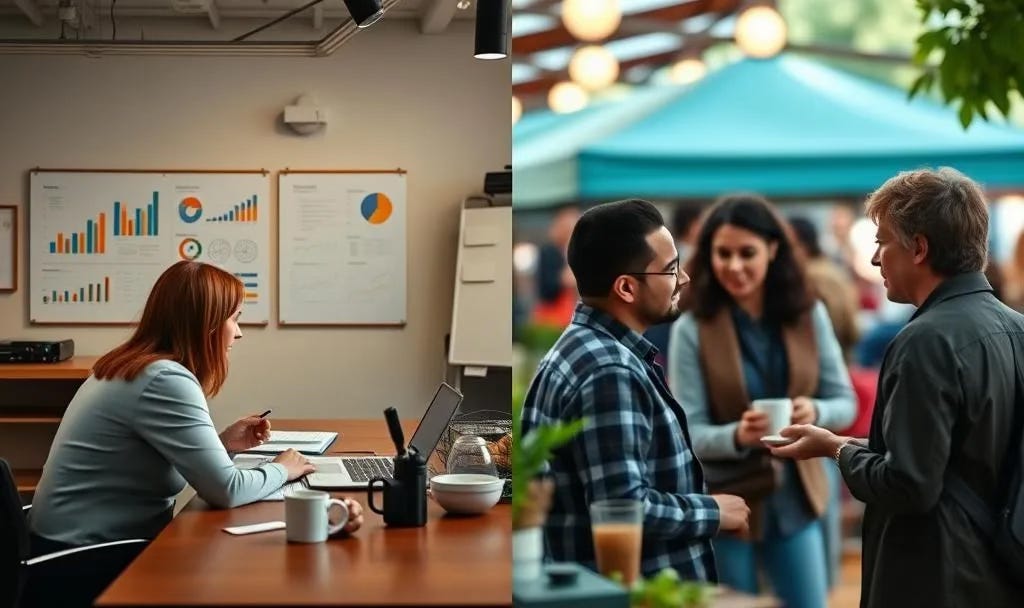
When we designed PBS39 News Tonight — one of Pennsylvania's most ambitious journalistic launches in decades — we built our editorial roadmap based on experience. I had recently left NBC10 and Telemundo62 in Philadelphia. Our managing editor had run the Express-Times and built LehighValleyLive.com. Our executive producer was a seasoned television news reporter.
With all that experience, we thought we knew what viewers wanted. I won't say we were wrong — but we weren't exactly right either.
Sure, the nightly newscast became the number-one late news program in the Lehigh Valley. It won awards and industry recognition. But something still felt off. The audience wasn't fully connecting. So, when it came time to evolve the format, we didn't just look inward — we turned outward. We commissioned two research studies: a brand study and a news consumption study.
The results confirmed what we had started to suspect. Viewers trusted us — even more than the region's legacy outlets. But they didn't want to be told when to watch. And they wanted deeper, broader coverage than what even a commercial-free half-hour show with no anchors could deliver.
That second study became our blueprint for LehighValleyNews.com. It wasn't just our editorial vision. It was the audience's. We weren't guessing anymore — we were listening. And that changed everything.
Beyond Demographics: When Audiences Become Verbs
For many organizations, research is a luxury they can't afford. Few organizations build it into their budgets, and even more are used to relying on the experience and judgment of their leaders and team members. Listening to their audience gets relegated to letters to the editor, the occasional phone call, an unsolicited email, or a comment made to a reporter or photographer.
But audiences aren't passive consumers. In the best media organizations, they're co-creators, catalysts, and collaborators. Those organizations treat their audiences as a living, breathing, active force — a verb, not a demographic.
In many TV newsrooms, the audience is a collection of static data points. Age ranges, income brackets, viewing habits — something you analyze, segment, and target. I remember we used to have a consultant who would come in with these massive 11"×17" books filled with data points and analysis, so detailed that he would provide rulers to make it easier to follow. To him and the station leaders, treating the audience as a verb — as people who respond, share, question, and shape your coverage — was laughable. For him, audience was something you broadcast to. The best newsrooms recognize it's something you collaborate with.
If you've read my previous writings, you've probably heard me talk about the power of pop-up newsrooms, of reporters holding office hours, and yes, research, both large-scale and simple on-the-fly surveys. I remember at daily newspapers where I worked, the stories that would go on the front page were typically selected by white men who didn't live in the communities we covered and didn't face the same challenges and disadvantages as many of our readers. The next day, when the sales reports rolled in, there would be consternation and frustration about why more papers weren't sold. To these editors, readers were a group of data points to be addressed. I have no doubt that if they had truly taken the time to talk with and listen to those readers, their front pages would have looked different and the reports would have shown a lot more green.
Many of my own content wins have come from moments where I put my ego and experience aside and opened myself up to my community.
In June 2018, after Hurricane Maria devastated Puerto Rico, we put together a Community Conversation called "Puerto Rico: The Human Toll." We held a town hall meeting and set up a resource fair so residents who had fled the island could get help and connect with organizations that could actually assist them.
Following the recording of the broadcast component, I recall standing with some staff and members of the community and listening as they spoke about how great it was that the station was doing something like this for the Hispanic community — and how it was a shame that there wasn't more on-air for that community. Apparently, years ago PBS39 had run a Spanish-language program. Standing there listening as they all spoke so passionately, I got caught up in the moment. When we got back to the station, I convened a meeting, and in no time, we had created a new show.
Es Tiempo Lehigh Valley was a talk show that highlighted the diversity and cultural essence of the Latino community in the Greater Lehigh Valley. This was the first show in PBS39's history to be done entirely in Spanish and the first Spanish-language program presented by PBS39 in more than twenty years. The community was overjoyed.
The Scrappy Toolkit: Low-Cost Ways to Make Audience a Verb
So yes, organized paid research can be great, but it can also be overwhelming and expensive. As you saw from the creation of Es Tiempo Lehigh Valley, that was ostensibly the result of a free conversation.
The truth is, most meaningful audience engagement happens in the margins — those informal moments when you're actually present in your community. Here are some approaches that don't require consultants with rulers:
Show Up Where Your Audience Already Is
Don't wait for them to come to you; go to them. Set up at community events, farmers markets, and school board or council meetings. Bring a simple sign that says, "What stories should we be covering?" and see what response you get.
You'd be surprised what people will tell you when they realize you're actually interested in listening, not just hunting for quotes. I've watched reporters learn more about their beat in thirty minutes at a coffee shop than they did in weeks of phone calls. There's something about being in the same physical space that changes the conversation entirely.
Turn Comments Into Conversations
Most newsrooms treat social media comments like noise to filter out. But those comments? They're gold mines. Story ideas, corrections from people who actually know what they're talking about, perspectives you completely missed.
Try this: respond thoughtfully. Ask questions that show you're actually curious. When someone corrects you, thank them where everyone can see it. It's not about brand management — it's about recognizing that your audience often knows more about the stories you're covering than you do. They're living it.
Create Regular Listening Posts
Look, people will tell you what they think if you give them a predictable way to do it. Maybe it's monthly office hours at the local library. Maybe it's a simple survey in your newsletter asking "What are we missing?" Maybe it's just a Google Form you mention every few weeks.
The magic isn't in the method — it's in showing up consistently. When people know you're actually going to be there, actually going to read their responses, actually going to follow up, they'll start talking. And you'll start seeing patterns you never noticed before.
Embrace the Follow-Up
Here's where most newsrooms completely blow it: they publish a story and immediately move on to the next thing. But your audience? They're still living with whatever you just reported on. That policy change, that investigation, that controversy — it didn't end when you filed your story.
Circle back. How did things actually turn out? What happened after the cameras left? These follow-up pieces often get the strongest response because people can tell you care about more than just the story — you care about the aftermath.
Make Data Collection Social
Skip the expensive polling. Try crowdsourcing instead. Post on social media or in your newsletter: "We're looking into housing costs — reply with what percentage of your income goes to rent." Or "Parents, what's your biggest concern about school funding?"
You won't get scientific sampling, but you'll get real voices saying things you hadn't thought to ask. Plus, people get invested in stories they helped create from the beginning. It stops being just your reporting and becomes something you built together.
Listen for What's Not Being Said
Pay attention to the stories that get no traffic. The events nobody shows up to. The issues that seem to matter to officials but make residents shrug.
Sometimes silence tells you everything you need to know. When something's not clicking, ask: "We've been covering X, but you're not reading. Should we be focusing somewhere else?" The answer might surprise you.
Turn Mistakes Into Opportunities
When you screw up — and you will — don't just run a correction and hope people forget. Use it as a chance to get closer to your community. Explain how the mistake happened and ask for help preventing it next time. "We misunderstood the zoning process. Who can help us figure out how this actually works?"
Your audience includes people who are experts in whatever you're covering. They want you to get it right, and they'll help if you ask.
These approaches come down to the same thing: showing up for your community, not just when you need something from them, but consistently. It takes humility, curiosity, and willingness to be wrong about what you thought you knew.
But here's what's remarkable: when you treat your audience as collaborators instead of consumers, they become invested in your success. They share your work more, they trust you more, and they become part of your reporting process in ways that make your journalism better.
The audience isn't something that happens to your journalism. When you do it right, they become your journalism.
What's one way you could start treating your audience as a verb this week? Comment and let me know — I'd love to hear how you're already listening to your community or what you're planning to try first.
And if this resonates, share it with someone who needs to hear it.