
Introducing: The Silo-Busting Scorecard
Collaboration isn't a culture problem; it's a design problem. Here’s a blueprint to fix it.

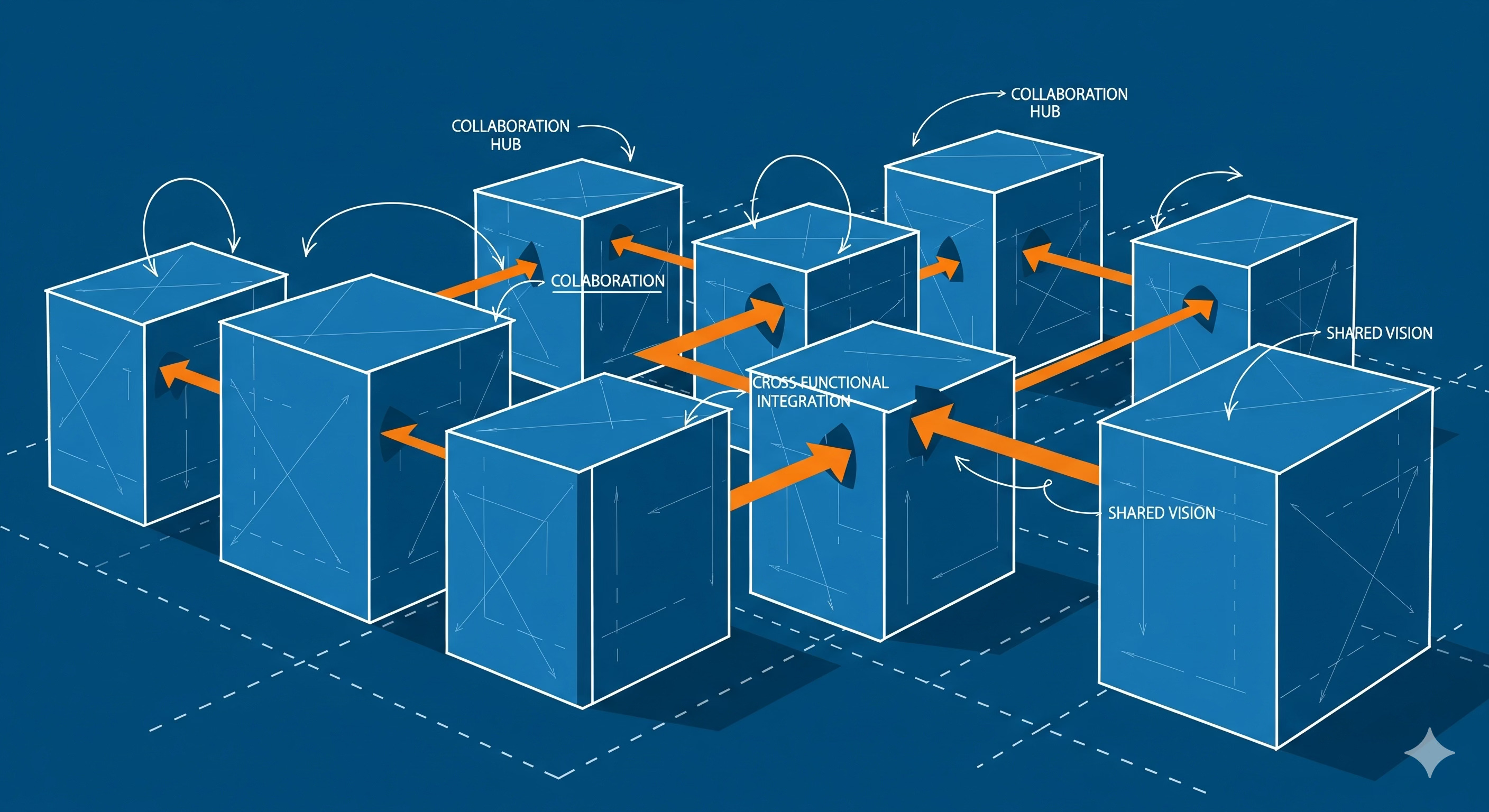
We’ve all experienced the slowness and friction of silos... But they are typically a symptom, not the root cause. Silos form when the organizational supports for collaboration are weak, underdeveloped, or nonexistent.
In the past, I’ve written about how the best solution is often a person: a “cultural broker” who can naturally connect different teams. [Link: The Real Way to Fix Silos (It's Not What You Think)]
But if you can't find that person, or if you need to fix the underlying system, you have to diagnose the specific points of failure. That’s the purpose of the Silo-Busting Scorecard. It’s a lightweight framework to get you and your team an honest assessment of your cross-functional health...
You can use it as an individual self-assessment, or even better, complete it with a counterpart from another team to open a dialogue.
My plan is for practical resources like this to become a core benefit for paid subscribers down the road, but I wanted to share this first with the entire Backstory & Strategy community.
You can download the framework here:

The Scorecard: Questions & Scoring
Instructions: Rate your team’s relationship with a key partner team on the following five factors. Be honest and base your answers on the most recent experience of your entire team.
1. Shared Goals How well are our team’s goals aligned with the goals of the teams we depend on?
(3) Consistently: We have explicitly shared goals and regularly track our joint progress toward them.
(2) Inconsistently: We are generally moving in the same direction, but we don’t have formally shared goals.
(1) Rarely: Our teams’ goals seem disconnected or, in some cases, are even in competition.
2. Role Clarity How clearly do we understand the roles and responsibilities of our key partner teams?
(3) Consistently: We know exactly who to go to for specific tasks or information and understand their responsibilities.
(2) Inconsistently: We generally know who does what, but there is sometimes confusion that causes delays.
(1) Rarely: We often struggle to find the right person and are unclear on how the other team operates.
3. Information Flow How freely and proactively is information shared between our teams?
(3) Consistently: Information is shared proactively as a default. We learn about important updates without having to ask.
(2) Inconsistently: We can get information when we ask for it, but it isn’t always offered freely, leading to surprises.
(1) Rarely: Information is guarded. We often feel out of the loop and have to chase down critical updates.
4. Communication Channels Are our channels for inter-team communication effective and efficient?
(3) Consistently: We have clear, agreed-upon channels that work well for our teams.
(2) Inconsistently: We communicate, but it’s often ad-hoc, leading to lost messages or people being left out.
(1) Rarely: Our communication channels feel broken or nonexistent. They are a major source of friction.
5. Mutual Trust & Respect Do we operate with a baseline of trust and view other teams as partners?
(3) Consistently: We assume positive intent and treat each other as valued partners with shared objectives.
(2) Inconsistently: We are generally collegial, but blame can surface when things get stressful.
(1) Rarely: There is a palpable lack of trust. We sometimes view the other team as an obstacle or competitor.
How to Interpret Your Score
This guide gives the scorecard its power. First, calculate your Total Score by adding the points from each of the five sections.
Overall Diagnosis
Score 13-15 (Strong Collaboration): Your cross-functional foundation is solid and silos are not a significant risk. Your focus should be on maintaining these excellent habits and proactively addressing any minor inconsistencies that arise.
Next Step: Acknowledge this strength with your partner team.
Score 9-12 (Silos are Forming): Collaboration is happening, but it’s likely dependent on individual effort rather than a reliable system. This inconsistency creates drag and puts you at high risk for developing hardened silos.
Next Step: Focus your immediate attention on your lowest-scoring areas.
Score 5-8 (Critical Silos): Silos are actively damaging your team’s effectiveness, morale, and outcomes. The cost of inaction is high, and this requires direct intervention.
Next Step: Schedule a meeting with your counterpart on the other team to discuss the challenges this scorecard highlighted.
Action Plan for Low-Scoring Areas
If you scored a 1 (Rarely) in any category, here are specific actions you can take:
If Shared Goals scored low:
Action: Host a joint goal-setting workshop for the next quarter. Create a shared dashboard with one or two key metrics that both teams contribute to, making your interdependence visible.
If Role Clarity scored low:
Action: Co-create a “collaboration map.” For an upcoming project, document roles using a simple RACI (Responsible, Accountable, Consulted, Informed) chart and post it in a shared space.
If Information Flow scored low:
Action: Establish a “proactive update” ritual. This could be a shared Slack channel for key updates or a brief, weekly email summarizing progress, blockers, and needs.
If Communication Channels scored low:
Action: Run a “channel audit” with your partner team. Ask and agree on: “Where do we ask quick questions? Where do we discuss complex issues? Where do urgent requests go?” Then document the answers.
If Mutual Trust & Respect scored low:
Action: Start with empathy. Host a “day in the life” session where each team can briefly present its goals, workflow, and biggest challenges. Understanding is the first step toward building trust.
P.S. - If you found this post helpful, would you please consider restacking it and sharing it with your audience?
This spreads the word and keeps me writing the types of content that you have enjoyed.