
Press Forward Built a Coordination Layer. For the Wrong Side of the Table.
Philanthropy has optimized the back-end database for local news, but the interface for newsrooms remains broken.

The Spring 2026 Impact Report makes a convincing case for funder alignment. It also reveals a massive gap. There is a difference between coordinating money and coordinating the system that money is supposed to build.
Dale Anglin’s director’s letter opens with a line that deserves attention: “What was once a fragmented effort is becoming a coordinated movement.”
That is a significant claim. It is also, either demonstrably true or fundamentally incomplete. It just depends on which side of the table you sit on. For funders, Press Forward has built something real. For newsrooms, the coordination Anglin describes is largely invisible.
A Quick Disclaimer: These thoughts are mine alone. They don’t necessarily reflect the official position of my colleagues or the leadership at the American Press Institute. While my work at API deeply informs how I see the industry, Backstory & Strategy is my space for thinking out loud and poking at the frameworks we all have to navigate.
Press Forward’s Spring 2026 Impact Report arrives just as the initiative’s own commissioned research started saying the quiet part out loud. In March, Elizabeth Hansen Shapiro’s analysis of 559 infrastructure proposals concluded that the field’s challenges are systemic. She argued the only way to be responsible is to look at system solutions rather than newsroom-based ones.
Read the impact report through that lens and something odd emerges. The report describes an organization that successfully coordinated one layer of the ecosystem. But the layer that actually touches newsrooms? That is still largely unbuilt. This is a story of genuine accomplishment and structural incompleteness published in the same document.
What Press Forward Actually Built
Let’s be precise about the infrastructure. The report uses that word generously, but Press Forward really built three things.
First, they built a funder coordination protocol. This is a mechanism for 130-plus foundations to share info and align strategy. The Public Media Working Group is the clearest example. It is valuable, but it is coordination among funders. It isn’t infrastructure that newsrooms actually interact with.
Second, they built a geographic distribution network. There are forty-four chapters covering 70% of states. But look at the scaffolding. These chapters are housed at existing community foundations. It is operationally impressive, but they didn’t build new institutional capacity. The scaffolding is borrowed.
Third, they built one grantee support pipeline. This is the LION Publishers sustainability audits paired with Blue Engine Collaborative coaching for the 205 Pooled Fund recipients. This is the closest thing to operational infrastructure for newsrooms in the whole report.
Everything else—the Summit, the Knight Media Forum workshops, the docuseries—is programming. Programming is fine. But programming doesn’t persist when the event ends. Infrastructure does.
The Ratio That Tells the Story
Of the funding flowing through Press Forward’s network, $230 million went to journalism support organizations (JSOs).The Pooled Fund put $20 million directly to 205 of the smallest newsrooms. That is roughly an 11-to-1 ratio of intermediary investment to direct newsroom funding.
An important qualifier: much of that $230 million is aligned grantmaking, where foundations give independently, and Press Forward counts the grants. The ratio may reflect the field's existing preferences more than a deliberate Press Forward decision. But that cuts both ways. If the $400 million mostly tracks what funders were already doing, the coordination layer is thinner than the headline suggests.
The report frames this as a feature. JSOs are supposed to create a multiplier effect. This is where I wrote about the General Hospital problem in January. When there is no coordination layer routing newsrooms to the right JSO, every major JSO feels pressure to become a one-stop shop. Pumping $230 million into that ecosystem without addressing the coordination failure risks reinforcing the duplication the field cannot afford.
The question isn’t whether Press Forward intended this ratio. They probably didn’t. The question is whether they treat it as a structural problem to be solved or just an outcome to be reported. The impact report does the latter.
The 800 Number and the Attribution Problem
The report claims “nearly 800 newsrooms receiving direct support from our network.” But much of that support flows through intermediaries. If a newsroom gets a Report for America corps member, they are “receiving support from the Press Forward network” in an accounting sense. Does the newsroom experience it that way? Probably not.
Press Forward is counting downstream. The newsroom is looking upstream and seeing the intermediary. The network itself is invisible to the people it claims to serve.
The LION/Blue Engine Blueprint
The most important thing in this report isn’t the $400 million. It is a design pattern buried on page six. Press Forward seems to have treated it as a program choice rather than a strategic revelation.
They replaced traditional grant reporting with sustainability audits. Instead of asking newsrooms to write reports justifying the money, they partnered with LION to conduct structured assessments. Then they paired each audit with coaching from Blue Engine.
This is what coordination logic looks like when it’s working. Three organizations. Three roles. One newsroom experience.The newsroom doesn’t have to figure out who to call. The system handles the routing. If Press Forward is looking for its North Star, it already built one.
But look at who is doing the routing. LION and Blue Engine are not large organizations. They are being asked to deliver a pipeline to 205 newsrooms because Press Forward designed the coordination and then contracted it out. The design is right. The question is whether it can hold at scale.
The report calls the resulting data “one of the most comprehensive data sets available.” Then it shares none of the findings. That is a missed opportunity. If you have audit data on 205 of the smallest newsrooms, you have a map of what actually converts into change. Why aren’t we using it to inform the field?
The Power Question
Press Forward is a funder-designed, funder-governed, funder-staffed coordination layer. Dick Tofel flagged this from the start. He noted how much of this was built from the top down.
The impact report is an answer to critics who said the money wasn’t moving. The money is moving. The chapters are growing. But the governance question the critics raised hasn’t been addressed. It has just been outlasted.
Coordination Is Not a Synonym for Alignment
Funder alignment means foundations agree on priorities. Funder coordination means they share information. System coordination means a newsroom in Cadiz, Ohio, can make one call and get routed to the right resource.
Press Forward has achieved the first two. The third doesn’t exist.
In product terms, they optimized the database but haven’t touched the user interface. The back end is more efficient. The newsroom’s experience hasn’t changed. But Press Forward already built the model that would change it. The LION/Blue Engine pipeline works. The answer to “what comes next?” is the decision to treat that design as the blueprint for the whole system.
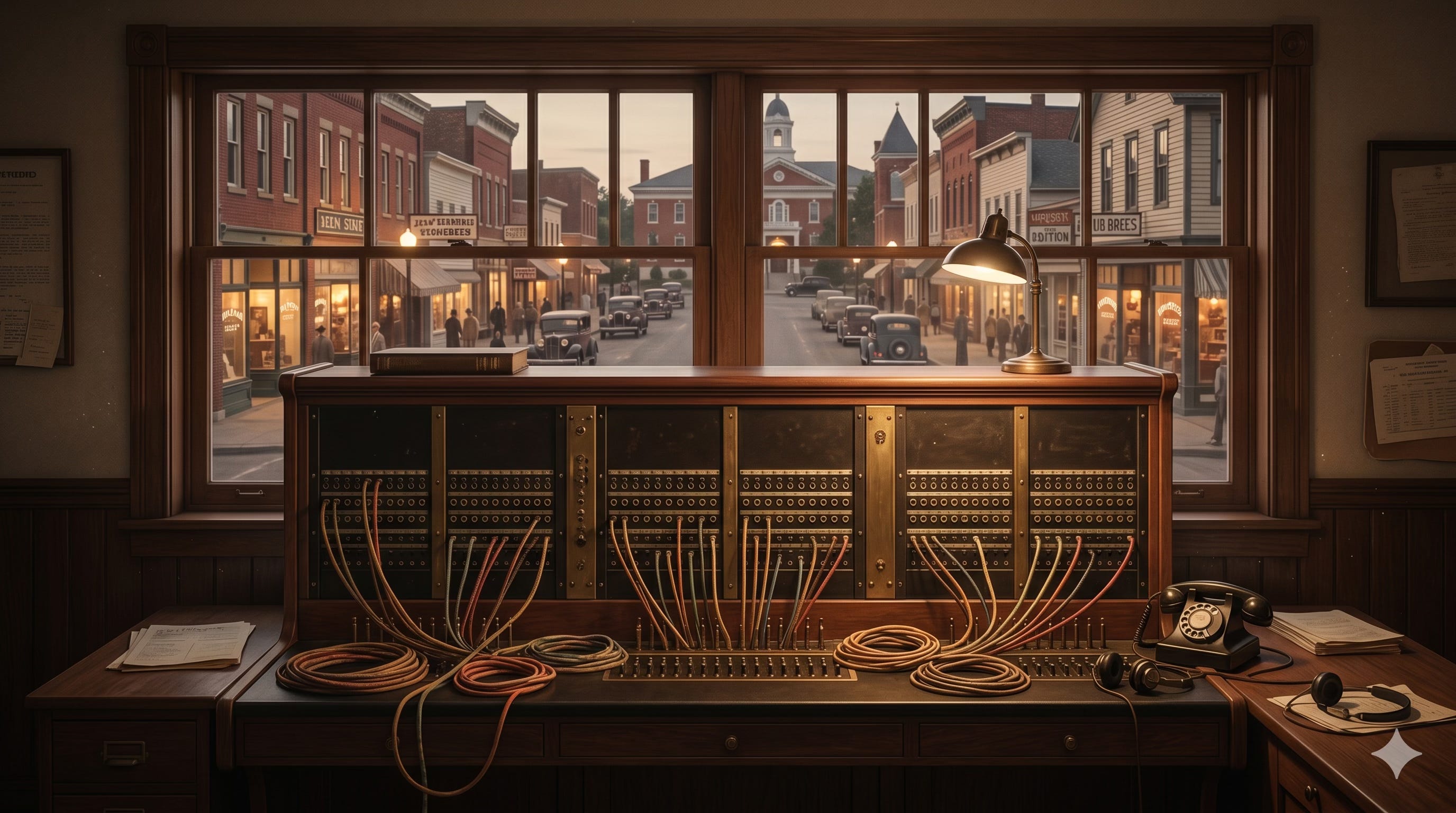
Two and a half years and $400 million in, the newsroom in Cadiz still doesn’t know who to call. Someone at Press Forward already designed the switchboard. It just hasn’t been plugged in.
Let’s Talk About This
I have strong views, loosely held. I’d rather be corrected than comfortable.
To the Press Forward team: You already built the blueprint. What would it take to make that design pattern the default rather than the exception?
To newsroom leaders: Did you experience the “network” or just a grant from an intermediary?
To the researchers: Do you see evidence that the “system solutions” conclusion was actually absorbed?
If you found this analysis valuable, please share it with a colleague who needs to be in this conversation.
Not a subscriber? Join 2,000+ media leaders getting weekly strategy deep-dives.
Something wrong? Click here to let me know. I take corrections seriously and will update the digital version of this post with any factual fixes.