
Social Media Just Beat TV News—And I Owe Some Publishers an Apology
For the first time, more Americans get news from platforms than traditional sources. Here's why the 'TikTok-first' strategies I criticized might have been smarter than I thought.

It finally happened—though it still feels strange to say out loud. The just-released Reuters Digital News Report 2025 confirms what we've all been sensing: more people now get their news from social media than from traditional platforms like TV, print, or even websites. In the U.S., social media hit 54%—beating TV news (50%) and news websites (48%) for the first time.
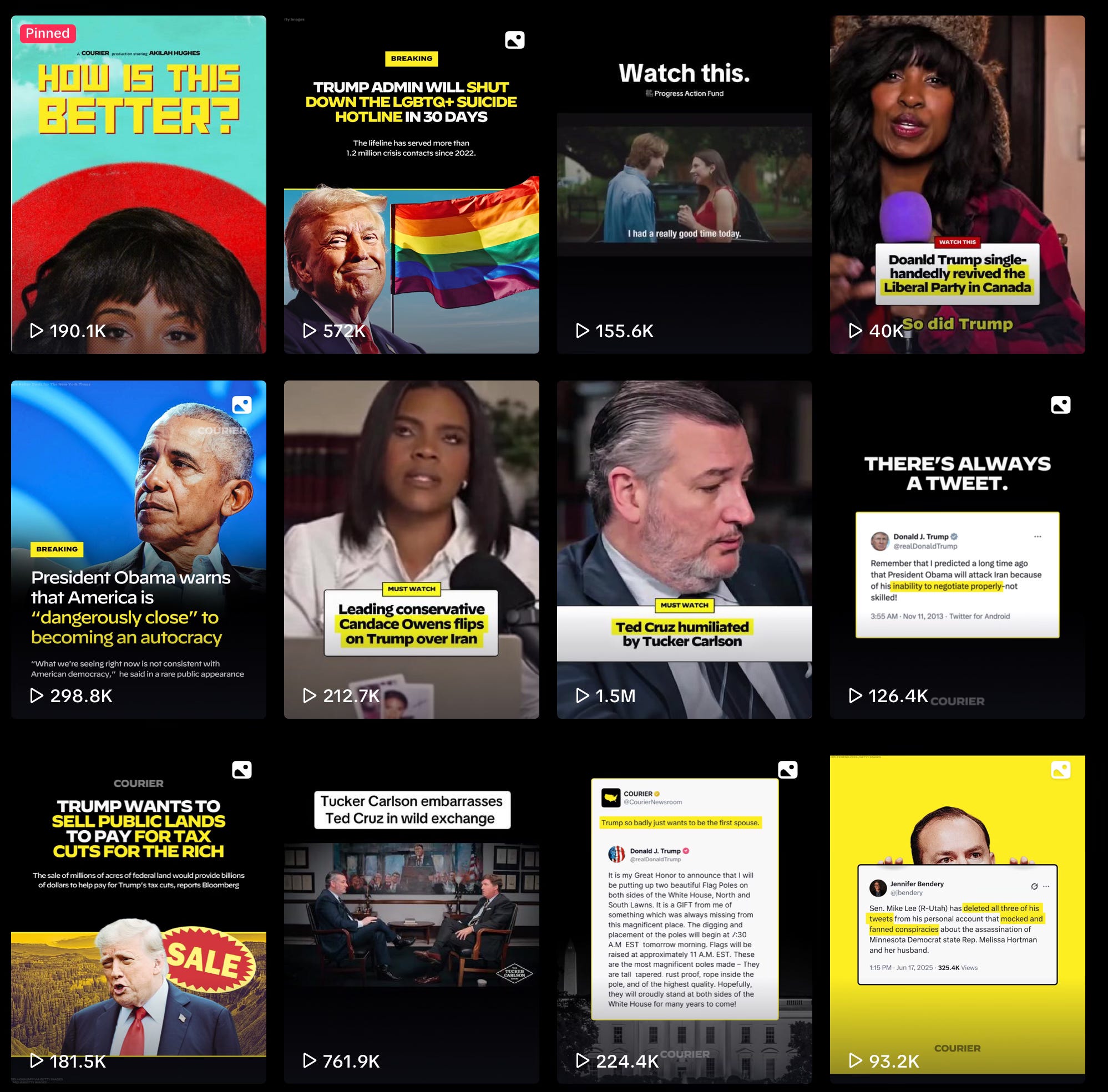
Here's the part that really made me pause: I used to shake my head at publishers who seemed to abandon their websites entirely in favor of TikTok-first distribution strategies. Courier Newsroom was one of them. Their homepages felt like an afterthought—almost a museum exhibit of what media used to be. I'd look at their sparse website and think they were doing it backwards.
But then I saw the numbers. And suddenly, I wasn't so sure I'd been right.
Why The Numbers Made Me Reconsider
The data shows why Courier's approach might have been smarter than I thought. Among 18-24 year-olds, 44% say social media and video platforms are their primary news source. Compare that to just around 20% among those 55+. If you're trying to reach younger audiences, maybe building for websites first actually is the backwards thinking.
The generational split isn't just preference—it's completely different expectations. And this shift accelerated fast. Social media news use jumped 6 percentage points in just one year, while traditional sources saw no bump even with Trump's inauguration.
But The "Rented Land" Problem Still Keeps Me Up At Night
Of course, there's still a question that keeps me up at night: What happens when the platforms shift again? What happens to publishers who build everything on rented land?
Remember Pownce? Vine? Facebook Instant Articles? YouTube Shorts may be booming today—but the algorithm giveth and taketh away. Publishers who went all-in on Facebook's Instant Articles learned this the hard way when the platform just... moved on. Traffic and revenue that seemed permanent vanished overnight.
We're not talking about supplemental distribution anymore. For many publishers, social platforms have become the primary relationship with their audience. That feels more precarious than anything we've seen before.
The Creator Reality
What makes this even weirder is who's winning. Joe Rogan reached 22% of Americans in the week after inauguration—more visible than most traditional news anchors. But here's the thing: 47% of people also see influencers as major sources of misinformation.
People are flocking to sources they simultaneously distrust. If personality beats institutional authority, what does that mean for publishers? And can traditional outlets even compete in a space that rewards authenticity over editorial standards?
Where This Leaves Us
Maybe the answer isn't choosing between owned and rented land. Maybe it's accepting that "media property" means something different now. The publishers who figure this out might be the ones building real audience relationships across platforms while keeping some direct connection—newsletters, apps, whatever works.
Courier's approach suddenly looks less reckless and more realistic. They saw where their audience was going and got there first, even if it meant their website looked like a relic.
The question for everyone else: are you ready to make that same calculation? And can you afford not to?
What's your take? Are we watching smart adaptation or dangerous platform dependency? Hit reply and let me know—I'm genuinely curious how other media folks are processing this shift.
And if you found this analysis useful, consider sharing it with someone still debating whether to take social-first distribution seriously.