
Stop Delivering Services. Start Building Products.
The most important strategic shift nonprofits can make today.

Over the course of my career, I’ve worked in product, on and off, for years and I can’t begin to count the number of debates I’ve been drawn into about a single question: What does 'product' even mean?
Behind those debates was always the same assumption: a product is a physical thing. After all, for most of business history, that’s all products were: physical things you could manufacture, store, and ship. The frameworks we all learned to use for marketing (you know, the 4 Ps, everyone’s favorite), were all built for that physical reality.
But here’s the thing:
“Viewing everything as a product is not just a semantic change but a strategic realignment that can lead to greater customer centricity, operational efficiency, and innovation.” —Craig Strong, AWS, writing for Forbes Technology Council
Sounds simple. But even in companies that have a formal Product team, everyone else in the company tends to act like product is somebody else’s job. As Strong put it:
“By adopting a product mindset across services, platforms and capabilities, organizations can ensure that every team is directly contributing to and accountable for the customer’s satisfaction and the continuous delivery of value.”
In other words, it ensures that the work every team is doing is directly and consistently helping the people they are serving. And that brings me to the question I care about most: What does a “product mindset” even mean?
Breaking Down Silos
Product thinking at its core is about connection. It creates a framework to help unify technology, strategy, and delivery. It creates a way for everyone to speak the same language, a language of value.
I got a crash course in that at Lehigh Valley Public Media, when we were planning PBS39 News Tonight. It wasn’t like launching a news show in one county. We were launching a news show in 12 counties. It wasn’t just “produce a newscast.” We had to design it like a product. We had to understand the needs of diverse communities, and build reporter brands that people could trust. And to do that, we had to constantly refine based on feedback. That cross-functional approach, the way it brought together editorial, production, and community engagement, helped to break down silos in ways that made the show truly sustainable.
The key is this: product thinking isn’t jargon or corporate-speak. It’s a lens that you can use to make everyone from editorial to development pulling in the same direction, because they all understand why the work matters.

The Service Organization Trap
This problem is particularly acute for nonprofits and mission-driven organizations. After all, missions are all about serving people. It’s no surprise then that nonprofits tend to default to a service mindset. They think in terms of programs and initiatives and interventions: discrete activities that address specific needs.
The problem is that that mindset falls apart when you have to make do with less funding, and deal with ever-more-complex problems. That mindset creates a model where you’re always reacting. It makes it almost impossible to scale and leads to teams duplicating efforts accidentally. Programs sit in silos, with their own metrics, their own workflows, their own funder reporting, etc.

What a Product Mindset Means for Nonprofits
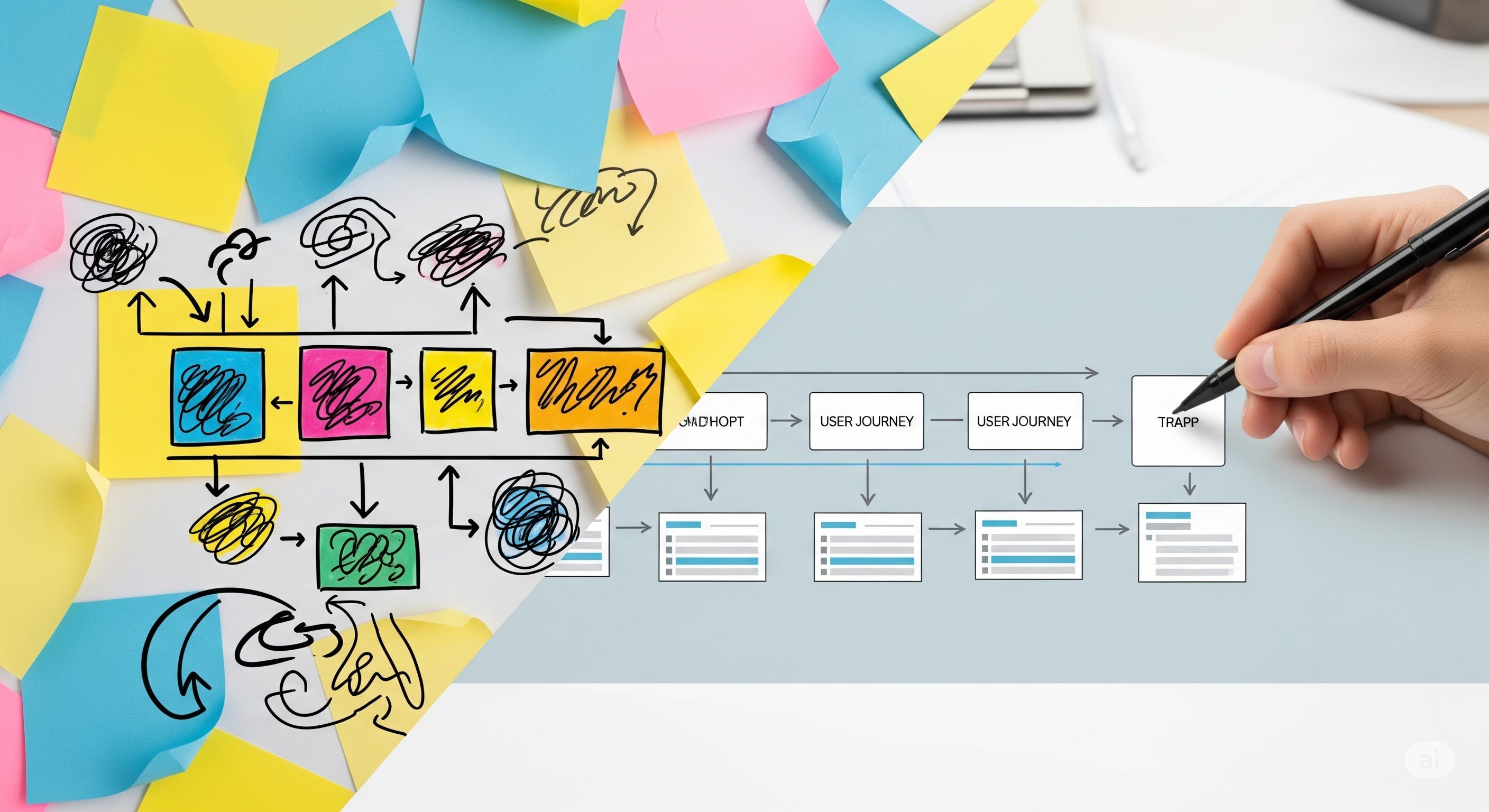
Product thinking means you start to stop asking “what do we do?” and start asking “what outcomes are we creating, and for whom?” It means treating everything—from training programs to community convenings—as a designed solution to a user's problem. And it means treating each of those solutions as a product that can be continuously improved.
At LehighValleyNews.com, our membership program was a really good case in point. We couldn’t just create some tiers and go for it. We had to roll up our sleeves and do the work: user research to map the member journey, testing different price points, iterating on the benefits based on what people told us they valued. Once we started thinking about membership as a product instead of a side-service we were able to get it to become a much stronger driver of engagement and revenue.
The key principles are:
User-Centered Design: Don't guess at pain points. Uncover them with real user research.
Systems Thinking: Break out of your silos by connecting offerings into bigger solutions (training connects to mentorship, which connects to ongoing support).
Iteration and Learning: Stop launching massive, perfect programs. Instead, build small pilots. Measure the hell out of the outcomes and refine your approach based on that learning.
Scalability: The question is no longer just “does this work?” but how can we design this to scale and to continue delivering value even when we’re not in the room?
Why This Matters Now
In a world of ever-tighter funding, nonprofits are feeling more and more pressure to be able to maximize their impact for every dollar. A product mindset makes that possible, because it allows you to clarify what’s working, what isn’t, and to create solutions that are designed to scale.
At the same time, funders are getting much more sophisticated. They’re not just looking for outputs, they’re looking for measurable outcomes and a real plan for continuous improvement. Product-minded organizations are the ones that can demonstrate that they have both. And in a competitive social impact field, the groups that can actually deliver consistent, scalable results will be the ones that can attract more resources and stronger partnerships.

The Transformation Process
Shifting to a product mindset takes a few key moves. The good news is that this doesn’t mean you have to create a new department, or buy a whole new suite of software. It can start small: carving out two hours to interview one program participant, or simply having one person from development sit in on a program team meeting.
It starts with reframing your metrics. Shift your focus from outputs (“how many people attended our workshop?”) to outcomes (“how many people changed their behavior as a result?”).
It means investing in user research so that you can get past assumptions and into what people truly need.
It means building cross-functional teams around user journeys, instead of around departments.
It means creating a learning infrastructure that collects feedback and encourages experimentation.
The easiest way to get started? Pick one program and change just one metric you track: from an output (e.g., ‘number of workshops held’) to an outcome (e.g., ‘percentage of attendees who implemented a new skill'). That one metric can start to shift the entire conversation.
For us, when we started Spanish-language programming, the shift was exactly this: moving from outputs (“produce more shows”) to outcomes (“are we actually reaching and serving new communities?”). Treating the initiative like a product is what made it work and allowed it to resonate.
The goal isn’t to turn nonprofits into tech companies. The goal is to bring the rigor and user-focus of product development into mission-driven work.
Done well, this doesn’t take away from the humanity of nonprofits; it amplifies it. Because a product mindset ensures that every program, every intervention is as effective as possible for the people it is serving.
The future of nonprofit work won’t be defined by the number of programs offered but by the outcomes those programs achieved. A product mindset is how we get there.
I've shared my experiences with this strategic shift, but the real test is applying it. I'm curious to hear from you:
What’s one "service" in your organization that could be re-imagined as a "product"?
Leave your thoughts and challenges in the comments.
PS - If you found this post helpful, would you please consider restacking it and sharing it with your audience?
This spreads the word and keeps me writing the types of content that you have enjoyed.