
The Difference Between Surviving and Building Something Real
Most nonprofits ask people to keep them alive. The smarter move is to invite them into an identity that helps build a future.

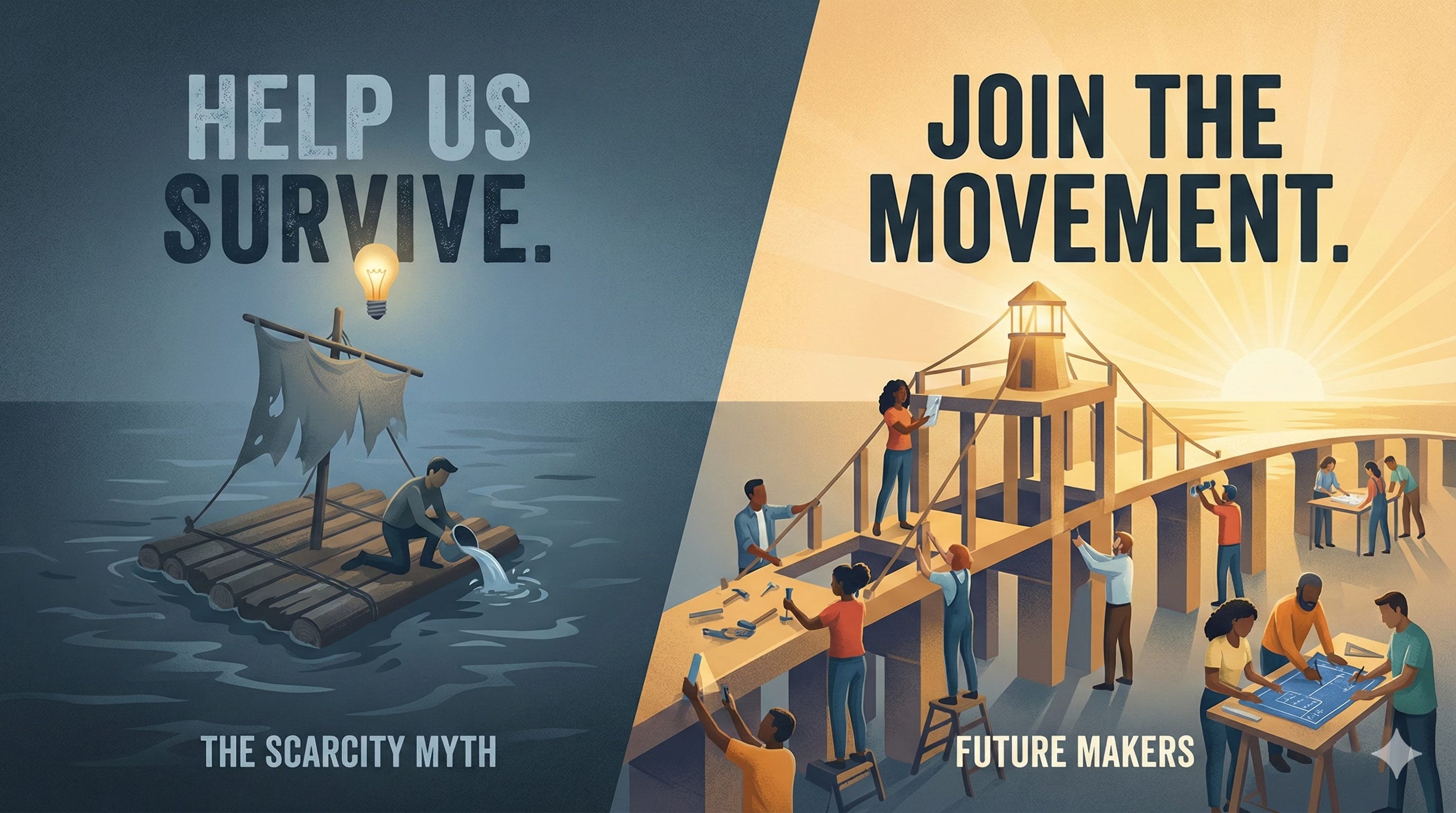
The word “sustainability” is on our lips a lot these days. You hear it in nonprofits. You hear it in newsrooms. You hear it in community groups that are just trying to stay open. We talk about headwinds. We talk about crisis. And then when it comes time to make the ask, we often shift into a voice that sounds like we are drowning and begging for air.
If you have spent any time around public media, you know this tone by heart. A host leans in and asks you to help them keep the lights on. You can almost hear the switch about to flip in the transmitter room. It is honest. It is familiar. It is not always a winning pitch.
I have been thinking a lot about what happens when you stop asking people to help you survive. I have been thinking about what it looks like to ask them to join you instead. And the example that keeps coming back to me is not from journalism at all. It is from higher education. It is from Lehigh University a few miles up the road.
Lehigh just released the impact report for its GO Beyond campaign. They have already raised more than $1 billion. The goal is $1.25 billion. And they reached that level of support while sitting on an endowment of roughly $2.4 billion.
Let’s sit with that for a second. Lehigh is not broke. They are not scraping by. They are not hoping to make payroll on Friday.
Their success cuts right through a belief I hear all the time. Many leaders think that showing strength hurts fundraising. They think stability scares donors away. They think a healthy balance sheet tells people to look elsewhere.

I understand the fear. I really do. But I also see the cost of leaning into that fear. Too many organizations talk about themselves like they are one bad month away from collapse. They hide their runway. They hide their reserves. They hide the very things that signal competence.
Lehigh shows what happens when you stop hiding. Asking for more on top of something strong signals direction. It tells donors you are building, not bailing water. People do not invest in a sinking ship. They invest in motion.
Here is the twist. Stability creates its own problem. When you have real footing, the old pitch disappears. You cannot rely on urgency. You cannot rely on fear. You cannot rely on guilt. You have to give people a clear picture of what the next dollar actually does.
This is where a lot of organizations get stuck.
The first trap is the math trap. You have seen this in your inbox. A subject line pops up with something like “We need your help.” Then it tells you the goal. Then it tells you your gift will be doubled. It never tells you why it matters. It makes the organization’s math problem your problem.

The second trap is the mission trap. It is prettier. It sounds better. It talks about holding power to account. It talks about telling stories no one else is telling. It talks about changing lives. It also assumes that donors already know what any of that means in practice. If you have reserves, they assume you are funded to do that already.
This is why mechanism beats mission. A phrase like “We hold power to account” does not tell me how a single dollar works. A line like “We need sixty thousand dollars to hire a data reporter who can audit the city budget” actually does.
This is where Lehigh shines. They do not pitch math. They do not lean on lofty mission language. They talk about actual work. And they talk about the identity of the people who help make that work possible.
Here is the part that stopped me. They have 53% alumni engagement. That is a wild number. And they get there by calling their supporters something very different. They call them Future Makers. It changes the relationship instantly. A donor reacts. A Future Maker builds.
There are a few simple things they do that any nonprofit or newsroom can use.
First, they sell momentum. They talk about the year ahead like they are stepping into a strong wind at their back. They say it is one of the best fundraising years they have ever had. It feels like a team heading into the last stretch with confidence. People want to join that feeling.
Second, they keep the work tangible. They show real projects. They show real outcomes. It is the same logic we used when we built things like Metrics for News or the Impact and Trust platform. When you show people what their support builds, they are more likely to move with you.
Third, they tell the story visually. They show the people behind the institution. A check signing is not a transaction. It is a moment between two leaders who care about the same future. The image tells the story more clearly than any sentence could.
Now here is the part that matters for all of us. I know it is already the end of the year. I know the emails are written. I know the mailers are out. I know the posts are scheduled. I also know the narrative for next year is wide open.

The mistake we make is confusing activity with impact. Activity is counting how many stories you publish or how many meals you serve. Impact is showing someone that a law changed or a neighborhood got healthier because you were there.
Lehigh leans into connection. They track engagement. They track networks. They track belonging. They know that money follows relationship and not the other way around.
So the question for next year is not how you get someone to pay. The question is what identity you invite them to step into.
If you treat your audience like observers, they will stay observers. If you invite them to help shape a healthier ecosystem, you give them a place in the story.
At that point, you are not asking them to help you survive. You are asking them to build something with you. And that is how movements start.
If this sparked something for you, I’d love to hear what you’re seeing in your own world. What identity are you asking people to step into next year? Hit reply or drop a comment. I read every one.
P.S. — Did this analysis provide you with a breakthrough strategy?
If so, please consider making a one-time tip to support the deep research and analysis that goes into every Backstory & Strategy post.
Additionally, if you found this post helpful, please restack it and share it with your audience. This spreads the word and keeps me writing the types of content you enjoy.