

A Quick Disclaimer: Backstory & Strategy is a personal, independent publication. The views, analysis, and commentary expressed here are strictly my own and do not represent the official position, strategy, or endorsement of the American Press Institute, its leadership, or its board. This is my personal space for analyzing the media landscape, testing new frameworks, and thinking out loud.
The Future of Public Media Initiative launched this week from Poynter and Public Media Company. The formal announcement bills it as a “futurecast” for public media, a 50-year reimagining of how the system could work. It’s a high-reaching goal.
When asked about how stations can weather the next few years in the companion Q&A attached to the release, Public Media Company CEO Tim Isgitt skipped right over short-term survival and went straight for the existential: misinformation, polarization, teen mental health, and the loneliness epidemic.
I have no doubt they’re solving those issues in good faith. But having sat through enough of these meetings myself, my spidey senses always prick up when we leap from “how do we keep the lights on?” to “how do we heal the American psyche?”
Isgitt also offered a candid admission during that conversation: “even before the CPB defunding, we weren’t really set up to solve these problems, public media was just not scaled or organized to serve our societal and community needs.”
Anyone who has tried to lead a station through the last decade knows that truth in their bones. It’s undeniably true. But what comes after that realization?
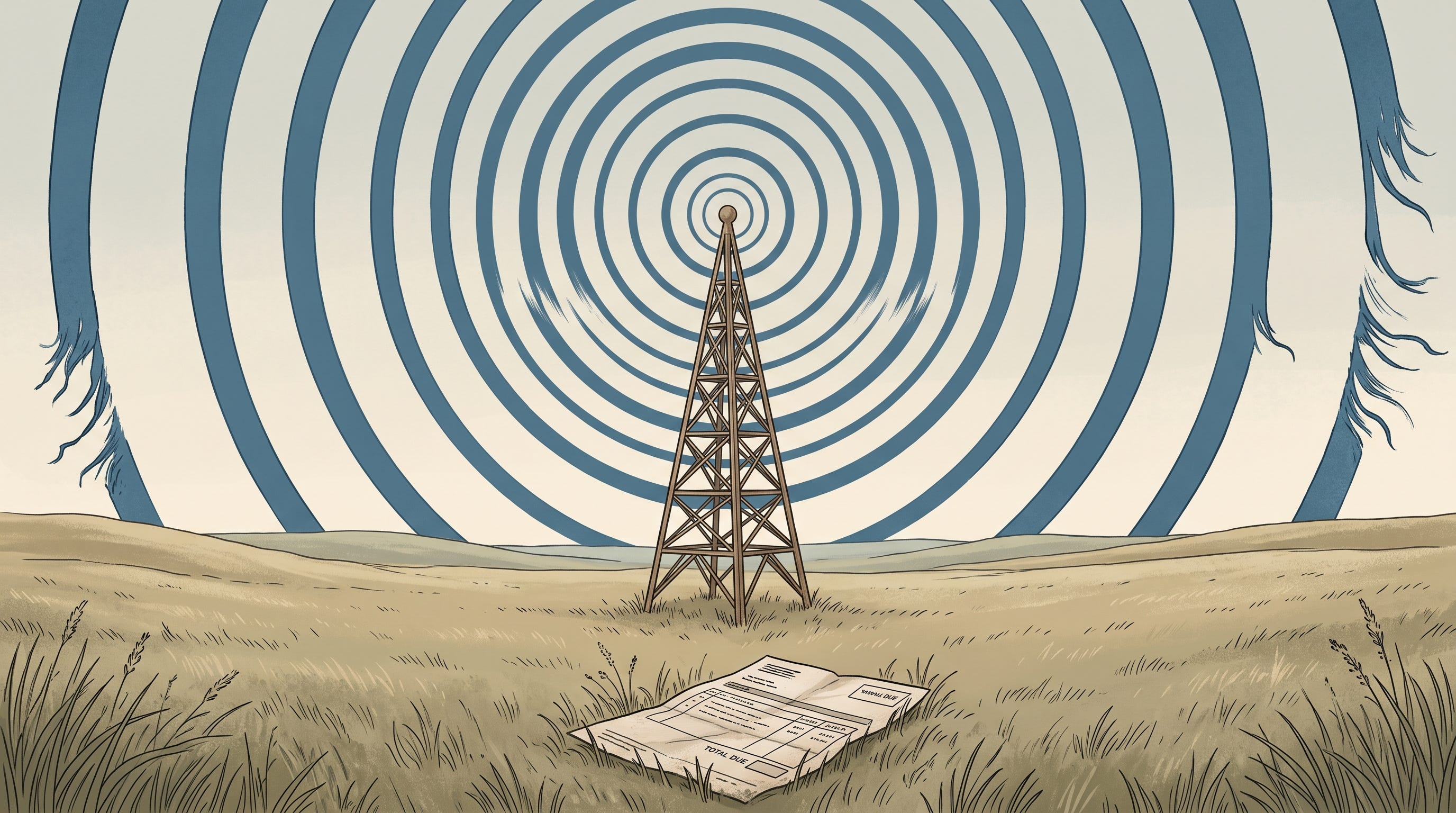
The Future of Public Media Initiative responds to that gap by expanding who’s in the room. And that’s where I see a familiar pattern emerge for this industry. I like to call it the Expansion Tax.
It’s the unpaid tab that comes due whenever an organization expands its reach, tackles bigger problems than it has cash for, or opens its doors wider than its foundations can bear. You pay it through burned-out teams, mission creep, and lost credibility.
This initiative is setting itself up to incur that tax twice. Here’s why.
Bill number one: expanding the tent without building the foundation
Look at initiative idea number three from the release: bringing community nonprofit newsrooms into an “expanded definition” of public media organizations. Fold them into governance. Listen to their challenges. Align on solutions.
That sounds great, if everyone involved has a seat at the table with equal say and stamina. To do otherwise isn’t expanding your definition of public media. It’s throwing an unpriced merger over the fence.
You can’t add more problems and partners to the room without adding the capital or infrastructure to support them. Until you do, you aren’t expanding the tent. You’re just giving more people a smaller piece of the tent pole.
The announcement puts that idea on paper and moves right on to the next bullet. It doesn’t address if or how newly included newsrooms will have actual seats at the governance table. It doesn’t tackle whether legacy station distribution channels will be opened to them or their reporting. It certainly doesn’t mention whether digital-only nonprofit publishers were invited to the table to help draft the idea, or merely informed of it after the fact.
As I laid out in Before You Merge: A Blueprint for Public Media Consolidation, expansion without real resources and shared power is the classic consolidation trap. It lets you announce solidarity in a press release while circumventing the hardest operational mechanics: governance parity, capital allocation, and the standing to say no.
Bill number two: expanding the mandate into the impossible
Misinformation, loneliness, and teen mental health are urgent crises. None of them can be solved by tweaking a governance model for 1,500 broadcast licensees.
Reaching for them pushes the initiative straight into problems local stations were never built or budgeted to fix. Which brings us to the second part of the bill: keeping local stations solvent while solving American alienation requires two entirely different toolkits running on two separate timelines.
Trying to make one report carry both is how good ideas quietly strangle themselves on their own ambition.
We ignored this plumbing years ago. Don’t let us ignore it again.
There is a reason these examples worry me. I’m not bringing this up just to throw cold water on the announcement. I bring it up because I’ve seen what happens when mission-driven rhetoric lets the rest of the system forget how operationally exposed we all are.
Just look at AI.
Public media doesn’t exist in a vacuum. It’s built on the promise of radical openness: free over the airwaves, free online, articles you can’t pay for, built to help everyone rather than gate anyone out. It’s our mission, and it’s worth fighting for.
But openness isn’t generosity if there are no boundaries around it. It’s liability.
Earlier this season, I ran an AI readiness analysis across every public television and radio station website I could find to evaluate their technical defenses against automated scraping. 352 stations in total.
Zero.
Not one single station showed active crawler controls or licensing language tailored to protect authored journalism. None. Zero.
While leadership plans to heal national loneliness, automated systems are scraping local station reporting every single day. They strip the bylines. They toss the editorial context. They turn hours of real shoe-leather reporting into synthetic summary points with zero ability to trace things back to the newsroom that did the work.
You can retroactively reprice or relicense content down the road. You cannot buy back the credibility of your brand when an LLM hallucinates an answer, cites your station’s call letters, and puts words in your mouth that your newsroom never authorized.
Just as we saw when auditing the transmission and cloud layer across the system, moral imperatives don’t pay the technical bills. The bill is already arriving at our doorstep, station by station, while the room debates a 50-year vision.
Pricing out the tab
If the Future of Public Media Initiative is serious about producing actionable outcomes instead of another report that collects dust on an executive bookshelf, leadership needs to stop racking up the tab and start pricing it out:
Price your definition of public media before it goes to a vote. If you want nonprofit newsrooms included in this process, give them an actual term sheet. Lay out board seats. Define what shared capital access looks like. And give individual shops the standing to say no thanks if the offer doesn’t work for them. Put that discussion draft out ahead of the listening tour, not after the framework has already hardened.
Separate your mandate into two timelines. Put as much weight on securing operational survival (money, towers, and governance for existing stations and partner organizations) as you do on tackling polarization and civic wellness. They are two separate projects with two different budgets, resources, and clocks. Station triage is not the same as a cultural think tank. Stop pretending otherwise.
Secure your perimeter right now, not three years from now. Don’t wait until a final report to look at the digital vulnerabilities stations are already exposed to today. The 352-station audit showed the basement is already flooding. Establish a technology working group immediately to help stations implement crawler policies, CDN protections, licensing addendums, and AI guardrails.
Create tiers of technological maturity stations can actually climb. If you build one operational house rule that every station must satisfy regardless of market, size, or budget, you’re going to paralyze the very stations you’re trying to help. Build a baseline floor that everyone has to hit, then create a graduated ladder above it so larger stations and joint licensees have something to climb toward as well.
Kudos to everyone involved for launching this initiative. We need more ambitious thinking across public media than what came before. My only ask is that leadership recognizes what they announced this week isn’t just a vision. It’s the first page of an expensive bill, and it’s time to figure out who is actually going to pay it.
How does your shop view this initiative? If you are running an independent nonprofit newsroom or a local station, are you eager to join this expanded tent, or does the governance and resource gap give you pause? Hit reply or leave a comment below.
If you found this breakdown valuable, consider sharing it with a colleague or board member who cares about the operational future of public media.