
The Influencer Dilemma: A Three-Layered Strategy for Newsrooms
When influencers reach more people than journalists, it’s not a gimmick—it’s a wake-up call. Here’s how newsrooms can turn that tension into trust.

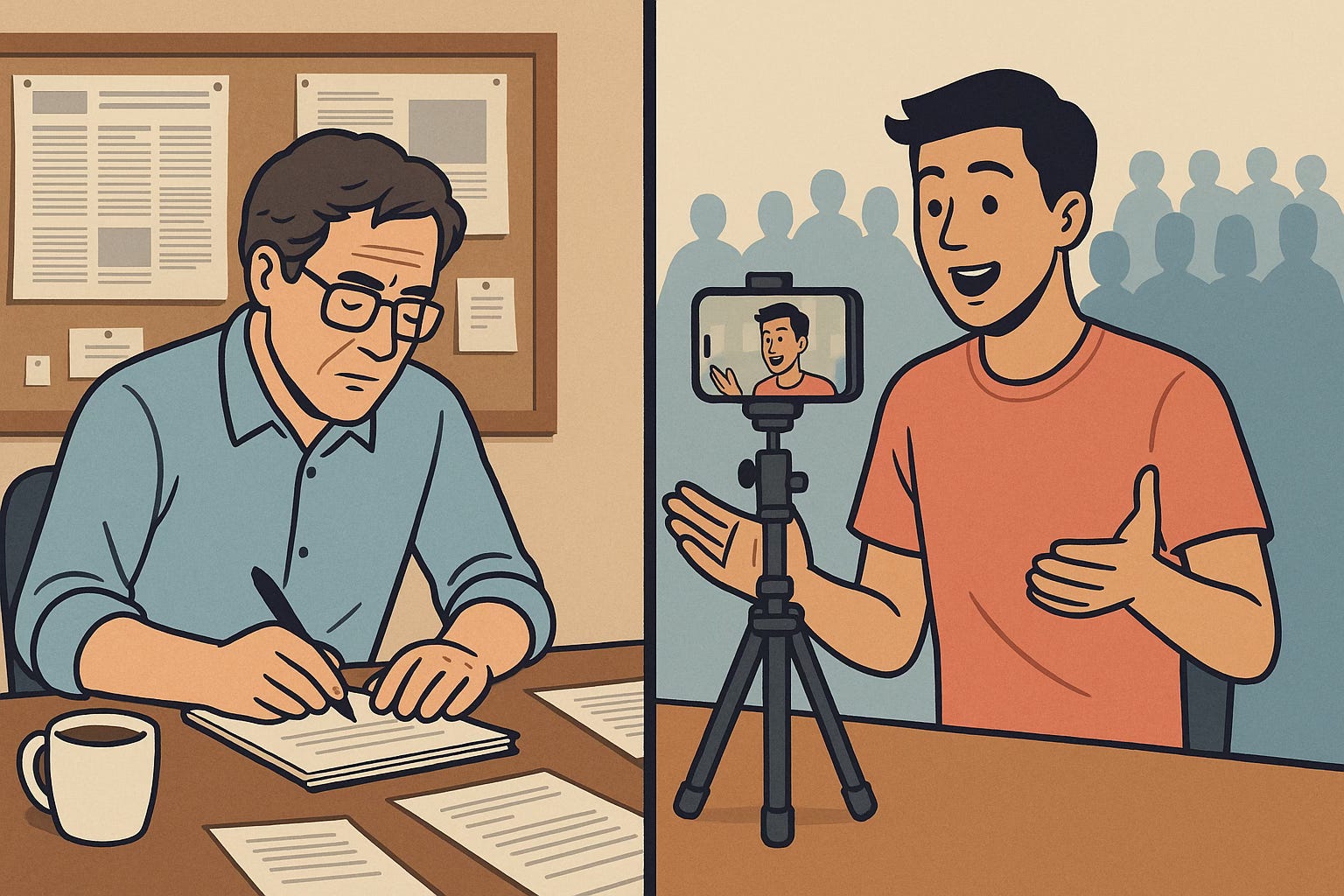
Recently, an editor at a local paper told me a story.
One of her best reporters just spent two weeks on a deeply-reported story. It was a must-read explainer of a controversial city zoning proposal. The article was great. It was an answer to prayers from readers who’d been begging for months for newsroom coverage.
When the day ended, the piece had 800 pageviews.
Meanwhile, a local real estate agent dropped a 60-second video on the same proposal to his popular community Instagram. The real estate agent’s video “dialed in” on what the zoning meant for property values. He wrapped it up in a funny bit he did on a peripatetic goat named Harlan. It got 50,000 views in one day.
This editor’s experience isn’t unusual. It’s a story I hear from newsrooms of all sizes all over the country. It is forcing us to face an uncomfortable reality.
What happens when our journalism is no longer the most influential voice in the room?
For many of us, this is why conversations about “influencers” matter so much. The way forward is a 3-part strategy. It starts with a practical business case. It builds on a clear sense of mission. And it uses the excellent playbooks innovators are already building in newsrooms around the world.
Let’s take a look at the three layers.

Layer 1: The Business Case. Why This Is a Smart Move.
If a newsroom strategy is going to have a long shelf-life, it must be practical. The business case gives you that. You can see this business-first perspective in the work of groups like the International News Media Association (INMA). They rightly point out that, first and foremost, we are organizations with business goals.
That’s why they ask a simple question. How do we grow our audiences and revenue when attention is so scarce?
The answer is practical and obvious. It’s about meeting our audiences where they are. Younger and more diverse audiences are not coming to our homepages. They are on TikTok, Instagram and YouTube. They are listening to creators they already trust. Partnering with creators is not selling out. It is a modern distribution strategy.
It’s also a new revenue stream. The creator economy is a big market. It offers models for sponsored content and smart partnerships to diversify revenue and bring in new income streams beyond traditional models. The point is simple. These partnerships drive growth. They help us turn followers into loyal subscribers. In the attention economy, we have to build these relationships or we risk being ignored.

Layer 2: The Mission Case. Why This Is Core to Our Work.
A mission-less business case is just a tactic. We need a deeper reason for our actions. That is why the second layer is the most important of all. It is the heart of the purpose that must drive our decisions.
As I wrote in a recent post, “Influencers in the newsroom: Building bridges, not walls,” this is not about chasing the latest buzzword or “cool” idea. This work is about a deeper, more fundamental rebuilding of trust.
We have to start by redefining what we mean by an “influencer.” We have to look beyond the social media stars to the people who are trusted voices in their communities.
Think of the Mom in your town. She’s got a popular Facebook group for suburban moms. Let’s call her Maria. She’s not a household name. In fact, she only has 500 followers. But when Maria posts information about a school board meeting or a new public health mandate, her Facebook followers listen. They read it. They discuss the issue and they act. Maria isn’t an influencer in the Kardashian sense of the word. She is a node of trust in her community.
Working with Maria isn’t marketing. It is plugging trusted journalism directly into a community that needs it.
When we do this, these collaborations can amplify our work. They cannot dilute or undermine it.
Layer 3: The Playbook. How We Get It Done.
This way of working sounds right. It sounds like what we should be doing. But it also raises immediate questions in any busy newsroom. Where do we find these people? How do you approach them? What does a partnership even look like? And how do you protect your journalistic integrity when working with them?
A great mission statement is just an idea until you actually know where to start. You need a map.
The map is already there. That is why layer three is so important. Organizations like the American Press Institute (API) have already built the practical playbook we need. Their step-by-step guide turns a great big idea into an actionable, ethical process. It provides checklists for finding partners who can speak to your community’s needs. It offers tactical advice on everything from contracts to co-creating content with these creators. This playbook is the confidence to try.

Bringing It All Together
Each of these three layers is important. Each has a role. But the future of our work requires all three of them to be working together.
The business case gives you the resources. The mission case gives you the reason. The playbook gives you the map.
The full answer to the debate cannot be either/or. It must be both/and. We can create partnerships that are good for business and, more importantly, essential to the future of our mission work.
I’d love to hear your perspective. Have you seen examples of journalists working with trusted community voices? Drop them in the comments—I’m collecting good case studies.
P.S. - If you found this post helpful, would you please consider restacking it and sharing it with your audience?
This spreads the word and keeps me writing the types of content that you have enjoyed.