
The Lifers Are Leaving. But Should They?
What organizations lose when they treat tenure like a liability

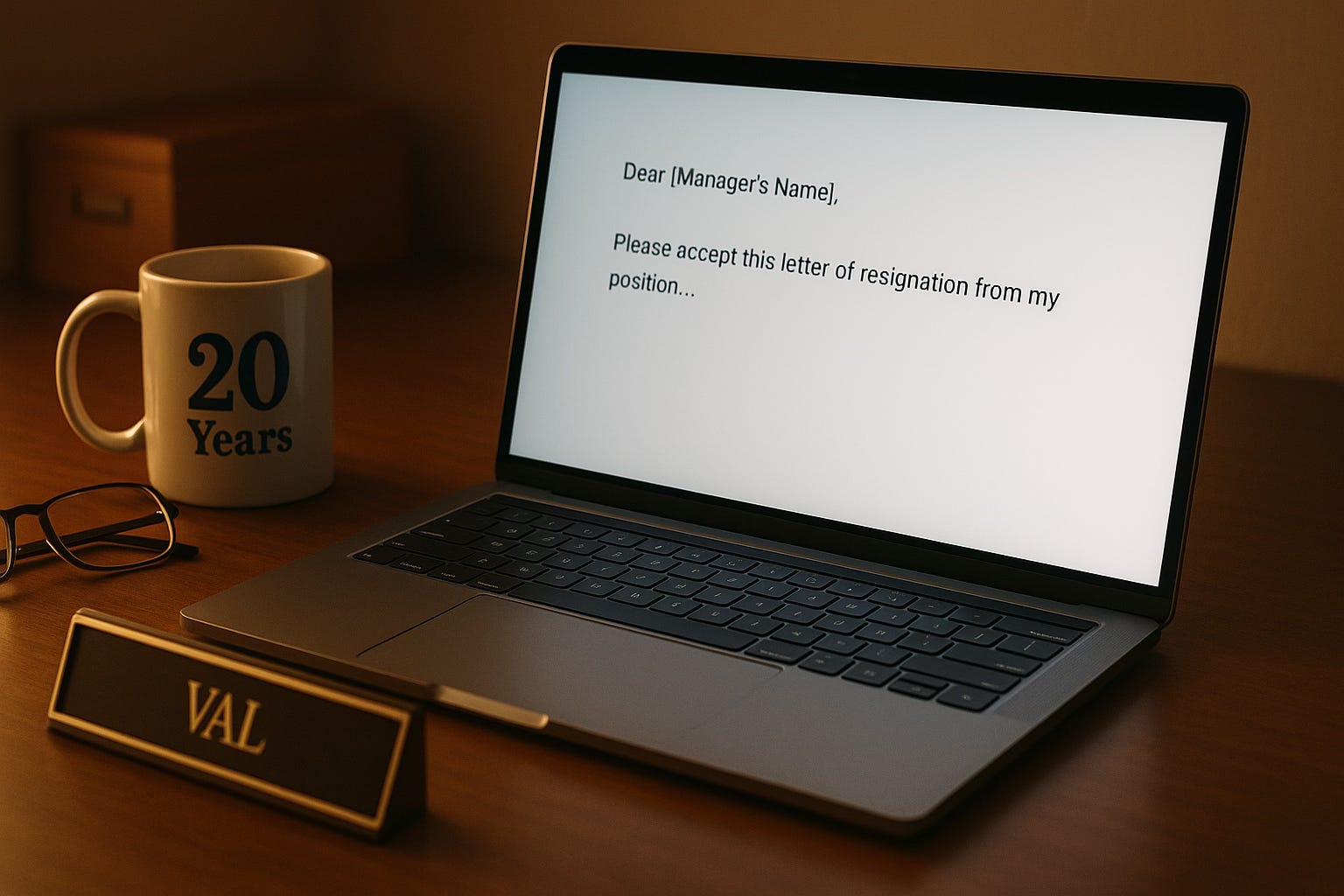
Recently, I was reconnecting with a friend I hadn’t seen in a while. We got to catching up on the usual—kids, work, life. And she told me she’d been with her company for 20 years. She said it with a kind of rueful pride, like she was confessing a sin and checking it off her list at the same time.
I told her the truth: in a world where everyone’s always moving on, sticking around that long doesn’t just happen. It means something.
That’s when it struck me—she’s not just loyal. She’s rare.
According to the U.S. Bureau of Labor Statistics, the median tenure of American workers as of January 2024 is 4.1 years. For those on the cusp of retirement, ages 60–64, the numbers are slightly more encouraging, but not by much. A little over 52% of this group have 10 or more years with their current employer. And, nationally, less than 10% make it to a 20-year work anniversary.
The public sector is a bit more forgiving. For government and education workers, the median employee tenure is nearly double the national average for private-sector workers at 6.7 years vs. 3.7 years. If you work in public service, then your friend is right at home. Twenty years, not so much.
What Walks Out the Door When They Leave
This is when my friend’s value proposition to her organization really kicks in.
LLumin found that 42% of the skills necessary to do a given job are unique to the individual currently in the role and could not be found elsewhere. After 20 years, she’s no longer just an employee. She’s the job.
And the numbers back up why that’s important. Cited by CultureWise, a Gallup study found that “employees with high tenure and high engagement performed 18% better than the average employee and 35% better than disengaged employees.”
Thirty-five percent. That’s not a marginal gain. That’s tens of millions of dollars.
For an organization, that 35% can equal a loss of $6–23 million per 1,000 employees, depending on the role level. That’s right—loss.
So when people with those kinds of qualifications and records walk out the door, that’s what they leave behind.
Why Some Companies Push People Out Anyway
With that in mind, I was surprised by the steady trend I saw of organizations treating tenured employees like problems. Liability, not asset.
In some cases, they represent a bloated salary line and increased health care costs, which is a double hit—since both their age and seniority tend to drive up compensation and benefits. But also, they’re experienced enough to know how to actually use those benefits.
To others, these people are anachronisms, relics of a less-flexible past, obstacles to a new way of doing business.
I used to work at a newspaper going through significant change management, and someone bought buttons that said:
“Dinosaurs not welcomed.”
I took it to mean that anyone who’d been there too long had no future.
No effort was put into knowledge transfer. The idea was to wait them out.
It was worse than a failure to include—it was a willful erasure.

The Coming Brain Drain
Let me be clear: I’m not saying all organizations feel this way. Or even that this attitude has predominated.
But we’re about to enter a time when this level of experience will be highly sought after—and highly in short supply.
The demographic cliff.
LLumin points to statistics showing that “approximately 10,000 Baby Boomers are turning 65 each day for the next 15 years.” And it’s not just a retirement problem. It’s a brain problem.
Institutional knowledge will take its biggest hit in the form of things like the unwritten rules, the who-you-have-to-go-through, the company folklore that they’ll never get from a training manual or an HR employee.
Which is to say, the unteachable stuff.
The kind of stuff that only a human can hold.
Organizations are frantically trying to digitize this information while they still have employees around who can remember it.
But recall and lived experience are two different things. The latter is what’s lost when people walk out the door.
My friend? She’s the poster child for the employee companies are racing to retain. But only after they’ve already made too many costly mistakes in the other direction.
The good news is, it’s not just Baby Boomers.
It’s not even just “older” employees.
A 40-year-old who started with your company at 20 has 20 years of tenure. Two decades of watching your organization hit its highs and lows. Two decades of watching and being watched, learning and being learned from, shaping and being shaped by a company’s values and history.
Twenty years of company politics. Twenty years of knowing where the landmines are and how to stay out of the way when the missiles start flying.
I’m sure my friend doesn’t see herself that way. But if your culture doesn’t value those things—if you’re still handing out buttons to “welcome the future” by excising the past—then the issue isn’t your people.
It’s your perspective.

How to Keep Your Lifers (Before They Leave)
Assuming you’re on board (and you should be), here are some initial steps toward keeping your long-timers happy, healthy, and on your payroll:
✅ Make tenure part of your culture
As Sojourn Partners puts it, organizations should stop thinking of tenured employees as a challenge to overcome—and start viewing them as a core value to embrace.
✅ Segment by tenure and life stage
One size does not fit all. Break down your workforce by tenure and life stage. Find out what they need. Then respond—and be nimble. Surveys are fine. Conversation is better.
✅ Match roles to strengths and interests
The person who started with you 20 years ago isn’t the same person who might want to stay another 20. Give them options: lateral moves, stretch assignments, internal consulting gigs that value their know-how without asking them to do the same thing every day.
✅ Make institutional memory your friend
Encourage long-timers to teach. Support them with reverse mentorship programs, onboarding buddy systems, or storytelling circles. Let their knowledge live on—don’t just archive it and move on.
✅ Invest in their professional growth
Spend some of that upskilling budget on the folks who’ve been around a while. Show them there’s still a next chapter.
✅ Mark the milestones
Recognize tenure where it’s earned. It doesn’t have to be a gold watch, but it should be appreciated. Celebrate wins. Make tenure part of your story.
✅ Listen to—and value—pushback
Tenured employees tend to ask difficult questions or challenge decisions. As Sojourn Partners notes, that’s not defiance—it’s often hard-earned discernment from people who’ve seen it all before.
✅ Make transitions purposeful
Even the most loyal employees will eventually leave. When that happens, treat it as a chapter change, not a formality. Legacy projects. Succession planning. Let them leave on purpose, not by default.
We’re in the business of people. And people need to know they matter.
We know that.
Organizations? Not always.
But that’s changing.
The lifers are leaving—in droves.
If you're lucky enough to still have them, it's only a matter of time before they, too, become ex-lifers.
The question is:
Will it be because they found a reason to stay?
Or because they didn’t?
If this piece resonated with you—or reminded you of someone who’s quietly holding things together behind the scenes—drop me a note. I’d love to hear how your organization values (or overlooks) its lifers.