
Vibe Coding and the End of Permission
Building software used to mean knowing how to code. Now it’s about knowing what you want — and the doors that once kept you out are gone.

If you’ve been reading Backstory & Strategy for a while, you’ve probably heard me talk about the tools I’ve built — Pocket Coach, Silo Buster, Agenda Flow. What you might not know is how I built them. I didn’t write lines of code. I didn’t hire a developer. I built them using something called “vibe coding.”
It’s a fairly new term. Andrej Karpathy, one of the cofounders of OpenAI, described it: “There’s a new kind of coding I call ‘vibe coding,’ where you fully give in to the vibes, embrace exponentials, and forget that the code even exists. I’m building a project or webapp, but it’s not really coding — I just see stuff, say stuff, run stuff, and copy paste stuff, and it mostly works.”
It’s fun. It’s light. It’s a shorthand for something that feels almost impossible to explain. Here’s the simpler way to think about it. For most of the history of software, building meant telling a machine how to do something. Vibe coding flips that around. Now you tell it what you want done, and it figures out the how.

You don’t need to know Python or JavaScript. You don’t need to understand how a front-end talks to a back-end. What you do need is curiosity. You need to have a sense of what’s possible. And you need one of the better vibe coding platforms, because the good ones don’t just build — they explain. The AI does the heavy lifting, but if you’re paying attention, you can watch how it thinks. You can see how it approaches a problem, why it makes certain choices, and you start to pick up pieces of that logic along the way.
This is where it really landed for me. I was building an early version of Pocket Coach. There was a feature I wanted that, not long ago, would’ve required hours of JavaScript and plenty of trial and error. But this time, I didn’t stop to figure it out. I told the system what I wanted. I described how it should work, how it should behave, what “done” looked like in my head. It built the first version. I tested it. Then I told it what I wanted changed. It built again. I tested again. And we kept going like that — round after round. Each pass got us closer. The process stopped feeling like coding and started feeling like a conversation.
I was the vision. The strategy. The north star. The AI handled the engineering and the execution. And together, we built something in days that would have taken weeks before.

Here’s what’s important about that. When I use a tool like Base44, I’m not coding. I’m designing. I’m describing what I want to build, and the system is writing the code to make it real. It’s not just a webpage. It’s a complete tool — interface, server logic, database — stitched together from my words. And the process itself is different. It’s not magic. It’s iterative. I describe a feature. It builds it. I test it. I describe what needs to change. It builds again. And we keep going until the tool does exactly what I need it to do.
That’s the part people miss. My role isn’t to write the code. My role is to bring the vision. The AI’s role is to do the technical heavy lifting. When those two pieces meet, that’s when the real magic happens.
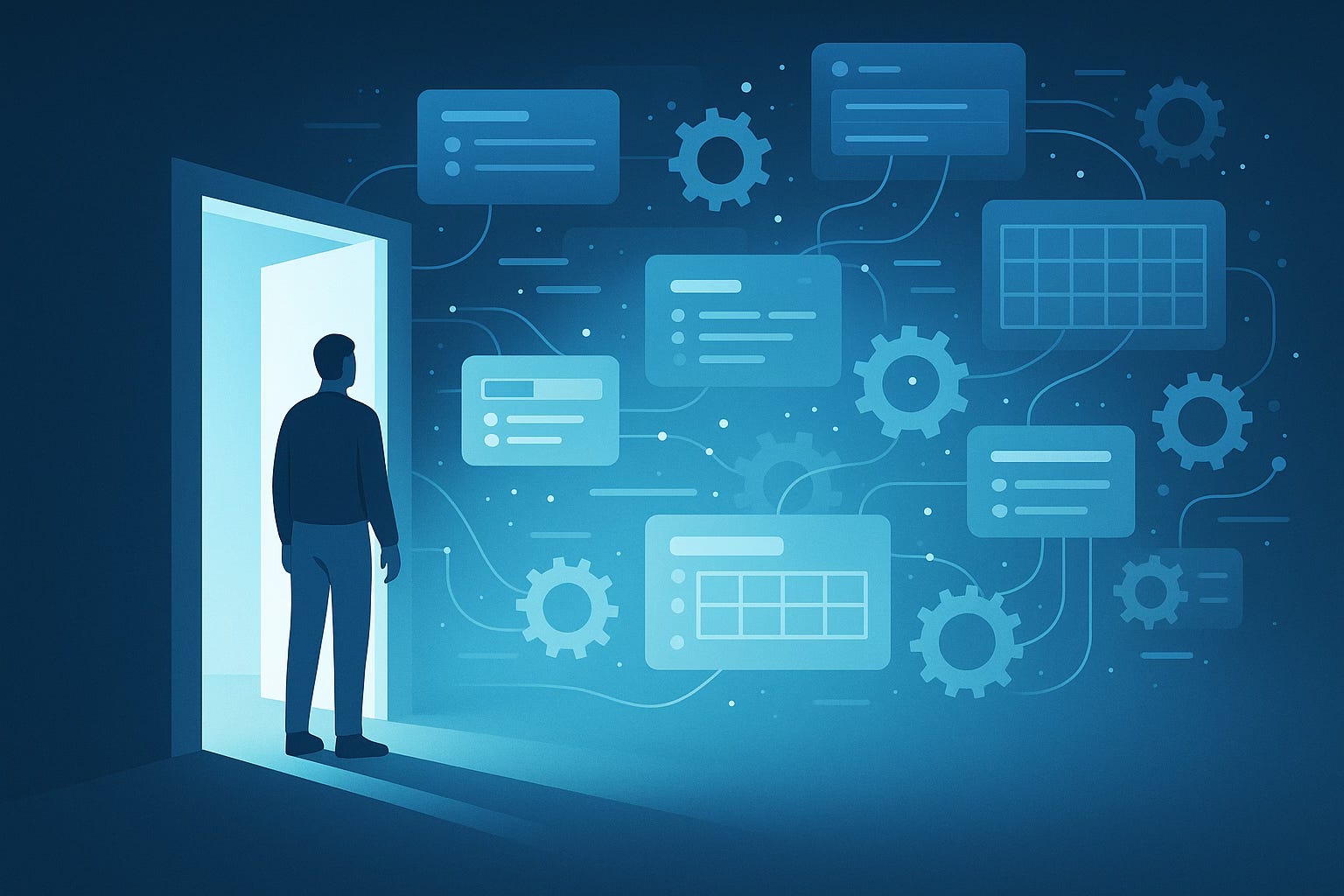
And this is bigger than the products I build. It means creating digital tools is no longer something only software developers get to do. The door you used to have to knock on to get permission to build? It’s wide open now. No-code was the first crack. Vibe coding is blowing it off its hinges.
And this isn’t just about empowerment, though that’s part of it. It’s also about access. Individuals no longer need a technical co-founder or a major grant to build something meaningful. Organizations can’t use budget as an excuse anymore. Engineering talent is still expensive, but now you can build and iterate for less than a thousand dollars a year. That changes everything.

For an individual, that’s liberation. Imagine a reporter building a searchable public archive of everything they’ve ever written. A project like that would’ve required an engineering team not long ago. But now? That same reporter can do it themselves. It might take time, but it’s possible. And it’s not just a tool for them. It’s a resource for their audience too.
For an organization, it’s an invitation to experiment. Picture a newsroom spinning up a dedicated education app for parents. Not just stories, but school board minutes, lunch menus, and event calendars all in one place. A niche product that provides real value and builds deeper trust with the audience. And they can do it without a massive budget or a single line of code.
And we’re just getting started. If vibe coding is what no-code was trying to be, the next step goes even further. These tools will become part of our daily workflows. They’ll be built, tested, broken, and rebuilt in real time. New products won’t be one-and-done launches. They’ll evolve as quickly as the ideas behind them. Anyone who understands the problem they’re trying to solve will be able to build something that matters. And they’ll be able to do it when it makes sense for them — without waiting on budget, resources, or someone else’s green light.

That’s the shift I want you to sit with. The space between an idea and a working prototype has never been smaller. There’s no permission required anymore. You don’t need a big budget or an outside team. All you need is a clear sense of the problem you’re trying to solve.
So think about your own work. What’s one thing you do again and again that makes you think, “There has to be an easier way”? What’s one piece of information you’re always chasing that really should just live in one place?
You don’t have to build it tomorrow. Hell, you don’t have to build it today. Start by describing the need. That’s where it begins. And if an idea is already starting to form, tell me about it. I want to know what you’d build if nothing was standing in your way — because nothing is.
I’m curious — what’s the first tool you would build if you didn’t have to wait on permission, budget, or technical skills? Share your idea in the comments. I’d love to hear what’s been sitting in the back of your mind.
P.S. - If you found this post helpful, would you please consider restacking it and sharing it with your audience?
This spreads the word and keeps me writing the types of content that you have enjoyed.