
When Allen Ginsburg Called the Newsroom
The phones once connected us to our communities. What happens when they stop ringing?

The Phones Were the Heartbeat
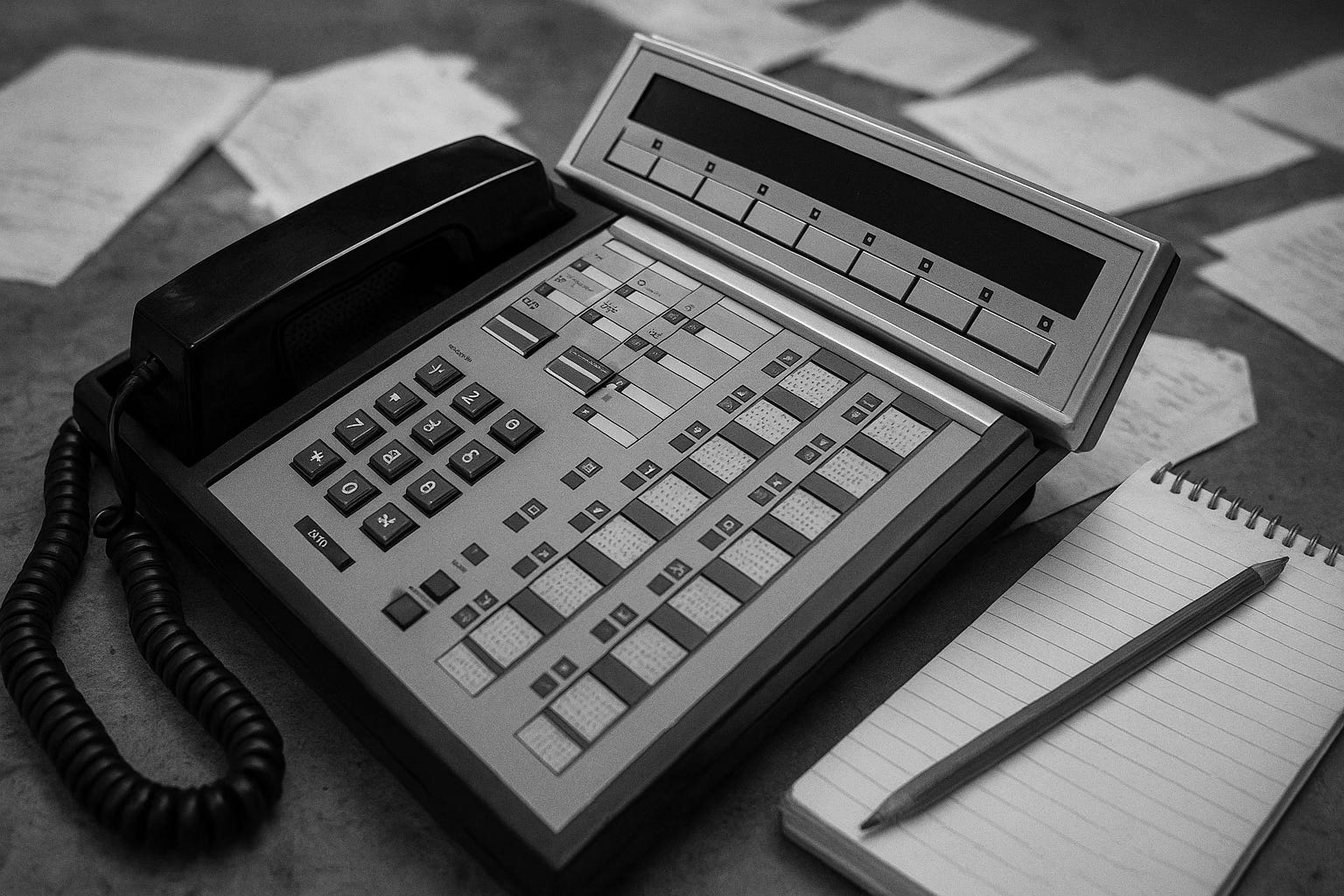
Back in the 80s, I was an editorial assistant at New York Newsday. My job was part go-fer — distributing copies of the paper, keeping the dot matrix printer loaded, and making sure the coffee never ran dry — but the real action came when I answered the phones.
At that time, people still called their local newspaper. They had tips, complaints, questions — or just wanted to be heard.
We’d get students stuck on homework, and the city desk treated their calls like a trivia contest. Who could answer first? Sometimes it was tips, sometimes it was rants. But it always felt like a direct line to the community.
Allen Ginsburg on Line One
One night during the Tompkins Park Riots, the phone rang:
“Good evening, New York Newsday, Yoni Greenbaum speaking, how may I help you?”
And this is what I heard:
“This is the esteemed Allen Ginsburg, and I would like to talk to someone about what is going on.”
As a fan of Beat-generation literature, I was awestruck. But I held it together and transferred him to a reporter covering the story. Just another night in the newsroom — with Allen Ginsburg on hold.

The Sisters Who Needed an Answer
Then there were the sisters. Two women who lived together and called constantly, demanding that we settle their arguments. The editors grew tired of it.
One night they phoned in with a doozy: Who got to the moon first — the United States or the Soviet Union?
The editor on duty, Dee Murphy, asked for the call. She listened carefully, then told the first sister: “The United States got there first.”
Then she asked to speak to the other sister. When that one got on the line, Dee said: “The Soviet Union got there first.” And she hung up.
The whole desk erupted in laughter. The sisters never called again.

What We’ve Lost
I don’t think any of that would happen today. Not because kids don’t need homework help or because people don’t have news tips to share. Not even because sisters stopped arguing.
It’s because something has shifted. People no longer see their local newspaper, TV, or radio station as a member of the family. They don’t feel like they can just pick up the phone.
That loss shows up in trust. In use. In respect.
When people could argue with us, laugh with us, or challenge us directly, they felt ownership of the work. They felt the newsroom belonged to them. Now? The phones are quiet, and so is the connection.
So here’s the question: What’s the modern equivalent? Do we even have one?
P.S. - If you found this post helpful, would you please consider restacking it and sharing it with your audience?
This spreads the word and keeps me writing the types of content that you have enjoyed.