
When Harm Shapes Us
What a stabbing, a robbery, and a lineup taught me about leadership

When I was younger, I worked as a bike messenger in New York City for about a year. One afternoon, I was eating lunch on the steps of a church in the East Village. A couple of men at the top of the stairs began shouting at one another. First it was cursing. Then shoving. One of them pulled a knife and drove it into the other man’s stomach.
I couldn’t tell you what was said after that. All I saw was blood. No one said anything to me. But I acted as if they had. I jumped on my bike and rode as if for my life, until I could no longer catch my breath.
Years later, towards the end of my time in the city, I was mugged at knifepoint outside my apartment on 109th Street. Rather than terrifying, it was more infuriating. I didn’t have much money and when the guy said let’s go up to your apartment I looked him in the eye and said, “Do you think if I had anything worth taking I’d be living here?”
He shrugged and walked away. But that wasn’t the end. He lived in the neighborhood and continued harassing me for weeks. The police later told me that this was his MO.
Eventually, a detective called to say they had an arrest and needed me to come down for a lineup. It was all Law and Order: the glass, the numbered men, the fluorescent lights. What I wasn’t prepared for was how I felt when I pointed to man #3. The words hardly left my mouth before I started sobbing.
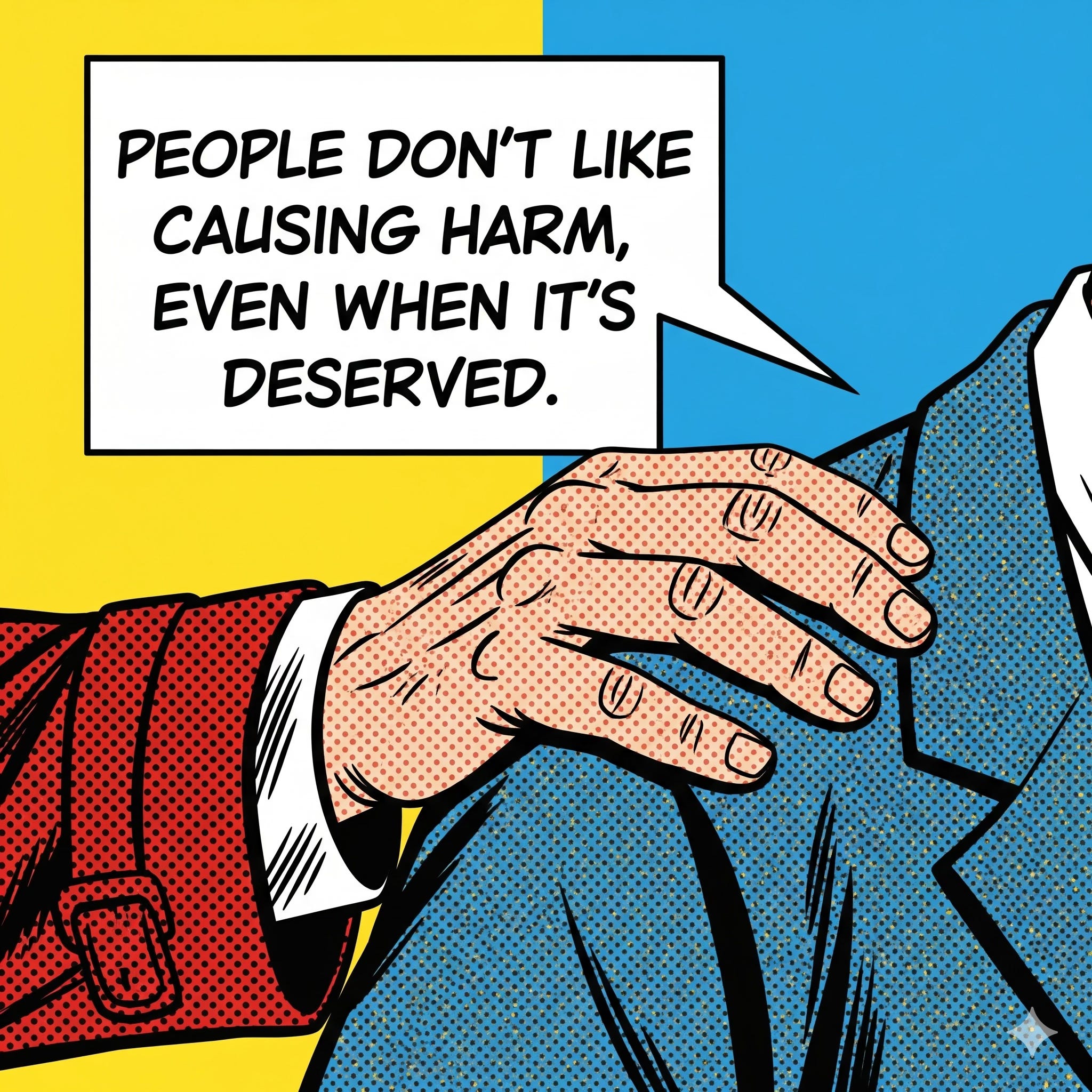
The detective put a hand on my shoulder and said something that has stayed with me ever since: “People don’t like causing harm, even when it’s deserved.”
At the time, I thought he was just telling me that was why I was crying. But in the years since, I’ve come to see how it related to the stabbing I’d witnessed years before. Whether we’re seeing harm or causing it, it rattles something in us.

That was the moment that informed how I think about leadership. I remind myself of it whenever I start worrying that a decision I’m making will hurt someone. “Do no harm” may not technically be part of the Hippocratic Oath, and I’m no doctor, but I came to believe that it’s a principle worth aspiring to as a leader.
The problem is that too much fear of harm can lead to paralysis. It can prevent leaders from making the decisions their organizations need in order to survive.
We all carry these moments with us. Some we live through. Some we see. Others are things we heard from a mentor, a parent, or a teacher. Acknowledging the role they play isn’t just important to leadership, it’s part of being human.
Leadership isn’t supposed to be painless. The hardest decisions rarely feel good, but that doesn’t make them wrong. If I had let my concern for my assailant prevent me from identifying him, how many other people might he have hurt?
The same is true of layoffs, pay cuts, or freezes. Avoiding those decisions may feel good for a while, but it almost always causes greater harm in the long term.
Our backstories don’t just explain who we are. They can give us the clarity and courage we need to make the hard calls that strategy requires.

P.S. - If you found this post helpful, would you please consider sharing it with your audience?
This spreads the word and keeps me writing the types of content that you have enjoyed.