
When Trust Walks Out the Door: Why Newsrooms Need Translators Now
Pew says Americans are losing confidence in journalists. API’s new guide suggests how partnerships with trusted messengers can help rebuild the bridge.

On August 20, Pew dropped a report that hit hard: fewer than half of Americans say they trust journalists to act in the public’s best interest. Nearly half think we’re losing influence, only 15% say we’re gaining ground.
Ouch.
But if you read past the headline, it gets interesting. Pew also found that people still prize honesty (93%), intelligence (89%), and authenticity (82%) in the people who provide them with news and information. Those traits haven’t lost their value. What’s changed is who audiences think embodies them.
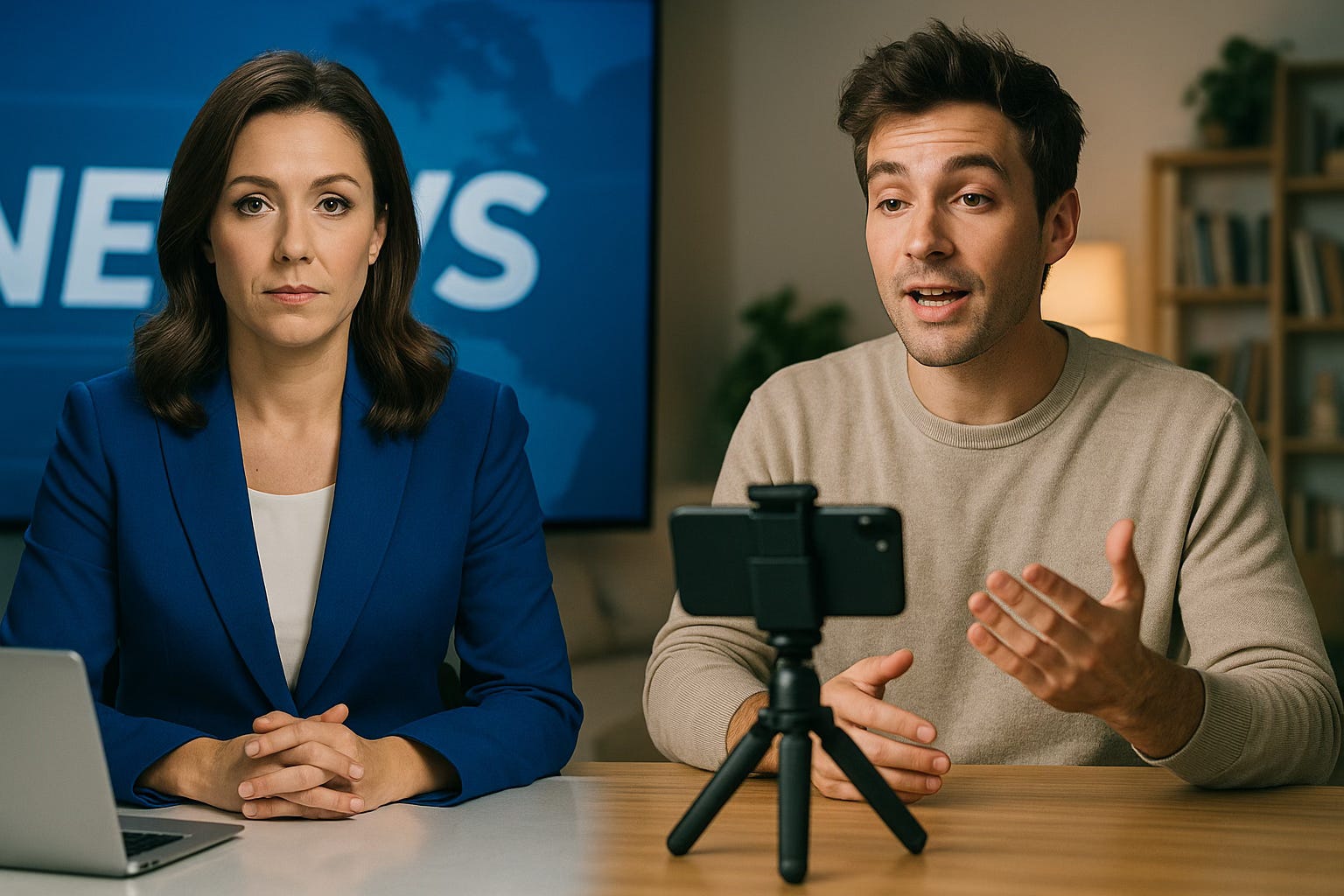
And here’s the rub for our industry: when people don’t see those qualities in “journalists,” they go looking for them elsewhere. Call them influencers, creators, trusted messengers, whatever label you like. The point is, that’s where the trust has gone.
Where Trust Has Moved
I see this in my own family. My 13-year-old son, Omari, trusts YouTube creators the way previous generations trusted Walter Cronkite. He doesn’t even call it “news.” It’s just information from people he believes in.
He even has his own trusted experts: one YouTube creator he turns to for airline industry news and another for celebrity culture. Two very different passions, but both delivered by people he trusts.
This isn’t hypothetical. It’s happening in our living rooms and on our phones and in the feeds we scroll before bed.
For newsrooms, this is not a curiosity or a footnote in a Pew report. It’s an existential threat. If trust has migrated, then relevance migrates with it. Relevance has always been the basis of an audience, after all. If we can’t find an audience, we cease to exist.

How Do We Meet This Moment?
About three weeks ago, I started my new job at the American Press Institute. In my first dispatch about the role, I promised to share what I was learning. I feel like today is one of those days.
In the past month, API has released a new guide for newsrooms: Influencer Collaborations: Lessons From Four Months of Local News Experiments. Think of this as a kind of field report from the front lines.
Where Pew did diagnosis, this guide offers a prescription—concrete steps for how newsrooms can partner with trusted individuals to reach some of the audiences we’ve been having trouble reaching.
What jumped out to me, flipping through this, was not just the tactical advice (though there is plenty of that). It was the reframing. Instead of perceiving influencers as competitors or threats, this guide frames them as potential partners, niche experts, community connectors, bridges. People who can help carry journalism into spaces where newsrooms no longer have a foothold.
One quick example: newsroom leaders who went into the project skeptical found that they needed to reframe, to use new language. “Influencer” was too loaded; “trusted messenger” landed better. Another discovery: those partnerships needed to work on the creator’s timeline, not the newsroom’s. Deadlines had to be shifted earlier because creators operate differently.
They’re small but telling lessons, shifts in mindset that are essential if collaboration is to happen at all.
What I’m Going to Call the Translator Model
This is the idea of the translator that I keep coming back to.
Years ago at NBCUniversal, I had a front-row seat to this exact model. We were covering youth homelessness in Philadelphia, and we partnered closely with Covenant House. They weren’t just a source to quote. They were translators—helping us understand experiences we hadn’t lived, connecting us to a community we needed to know better, and amplifying the journalism so it reached the people who needed it most.
That’s the same model I see API pointing to now, but the platforms have changed.
The API guide is about how to work with YouTubers, podcasters, and other digital creators in the same way we might have worked with Covenant House or Our Ladies of Mercy. Imagine a local paper that runs a data-heavy investigation into housing prices. On its own, that reporting may reach policy wonks and a few die-hard readers.
Now pair that story with a local real estate creator on YouTube or Instagram—someone the community already trusts. Suddenly, that spreadsheet turns into something accessible, engaging, and useful for a family trying to buy their first home.
Journalistic rigor plus authentic community voice. That’s the formula I think we need more of.

An Invitation
Before I close, one quick plug for a live event coming up on August 27: How Journalism Collaboratives Can Work With Influencers.
This won’t just be talking heads. You’ll hear directly from journalists and creators already experimenting with some of these models. I’ll be there listening. I hope you can make it. It would be nice to see some of you there. Here’s the link.
Final Thought
If Pew showed us the scale of the trust gap, I think API’s work is going to be all about how we build the bridge.
The future won’t be secured by nostalgia. It will be built on journalism’s ability to adapt—and to flow through the people audiences already trust.
What do you think? Could your newsroom—or the ones you follow—benefit from a “translator” partnership with trusted creators? I’d love to hear your thoughts in the comments.
PS - If you found this post helpful, would you please consider restacking it and sharing it with your audience?
This spreads the word and keeps me writing the types of content that you have enjoyed.