
Why Are We So Obsessed With the Weather?
It’s not small talk. It’s control, anxiety, habit—and a multibillion-dollar media machine.

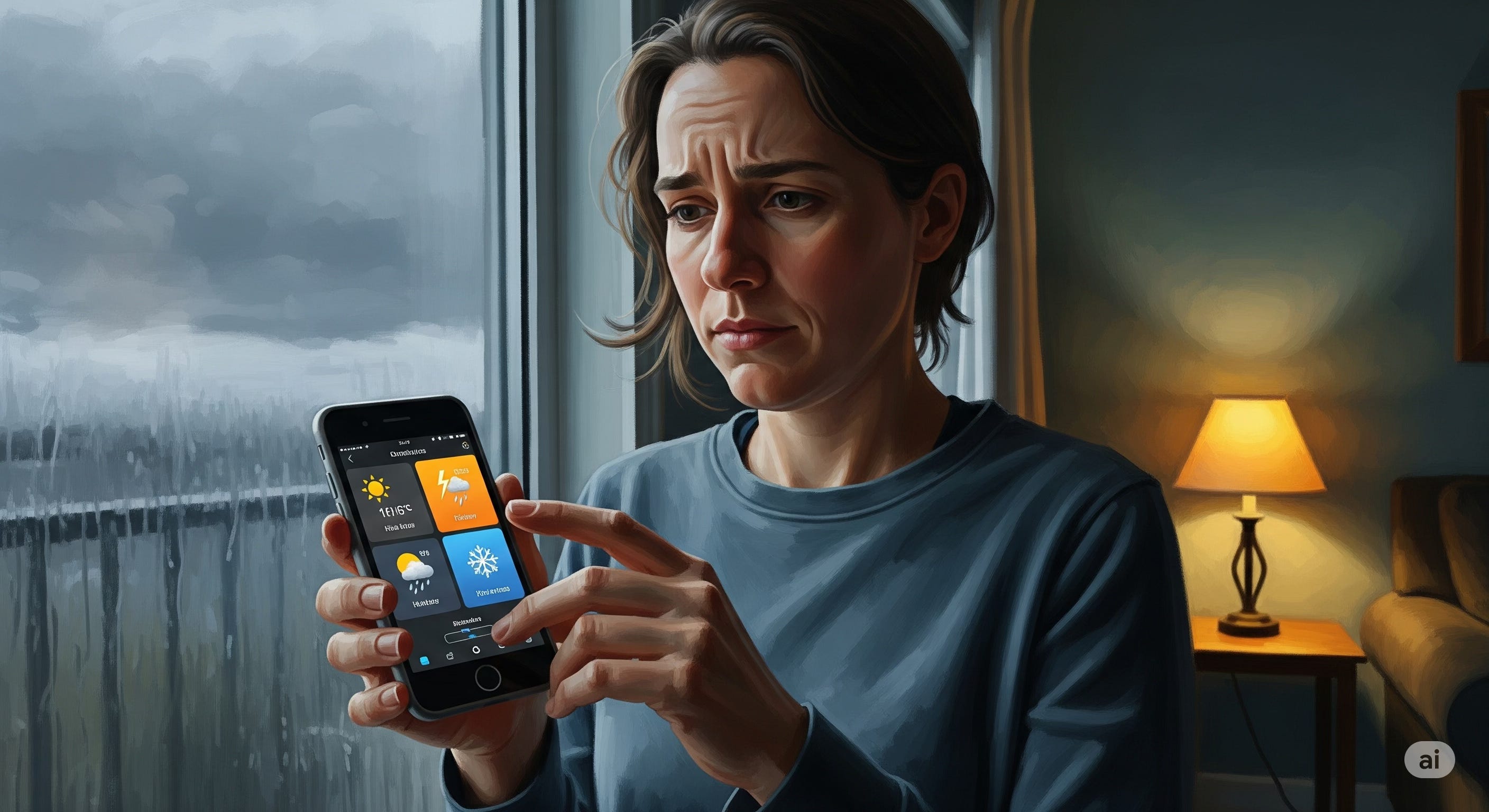
How many times did you check the weather today?
How many weather apps do you have on your phone? One? Three? Are you one of those people who checks two just to see which one feels more accurate?
You’re not alone. Somewhere along the way, weather went from a useful utility to a personal obsession. What to wear, when to leave, where to go, 0it’s all filtered through the forecast.
Refresh. Reassess. Repeat.
But what are we really doing when we check the weather for the fifth time today?
It’s Not Just the Weather
At its core, this isn’t about temperature or precipitation. It’s about control.
We’re wired to look for patterns. Evolution taught us that predictability = survival. But in modern life, most of the big forces feel out of reach. Weather is one of the last holdouts—unpredictable, untouchable, and still capable of ruining your day.
So we track it. Obsessively.
There’s data to back this up:
More than 50 million people open a weather app every day.
75% of users say it’s part of their daily routine.
Nearly 90% let the app track their location for slightly more accurate info.
And across all age groups, weather apps outperform traditional sources like TV or radio.
And yet—despite all this data, all these forecasts—we still complain.
Too many alerts. Too many contradictions. Not enough certainty.
We keep asking for better info, but don’t feel any better when we get it.
That’s the paradox.
Why It Feels Like Too Much and Still Not Enough
We check weather apps for the same reason we check traffic, election polls, or that unread Slack thread: we think knowing will help us feel more in control.
It doesn’t always work.
Psychologists call it the signal-to-noise problem: the more updates we get, the less clarity we have. One app says rain at 3. Another says sunshine all day. And radar? Just spinning colors that leave you more confused than when you started.
The problem isn’t volume. It’s relevance.
We’re flooded with information, but starved for insight.
So we keep refreshing.
Not because we want more, but because we’re hoping this one will finally be useful.

The Local News Paradox
When we launched LehighValleyNews.com, we hired a research firm to ask folks in our coverage area what they needed—and what they were already overloaded with.
Weather topped the “don’t need more” list.
So, we made the call: no weather section. We figured, why duplicate what’s already out there?
And then… the emails started.
"Where’s the weather?"
"How can a news site not have a forecast?"
The very thing people said they didn’t need became the first thing they missed.
But I shouldn’t have been surprised. I’d seen this before.
In TV News, Weather Is the Brand
When I worked in local TV, weather wasn’t just part of the news—it was the news.
We had full weather teams, multi-show segments, and tech that cost six figures (and that’s probably being conservative). Storm tracking systems, 3D maps, Doppler radar that looked like it was built by NASA.
And all of it was justified by the same belief: people tune in for the weather.
That wasn’t just a hunch. A broadcast meteorologist once told me, “Weather consistently ranks as the top reason people watch local news.” Viewer research backed it up.
And during major storms? Ratings went through the roof:
Hurricane Ian (2022): 3.4 million viewers for The Weather Channel—its biggest in five years
Hurricane Idalia (2023): Over 2 million total day viewers; The Weather Channel ranked in the top 5 cable networks during coverage
Hurricane Sandy (2012): 2+ million people tuned in around the clock
Normal primetime averages: ~150,000 viewers
During severe weather: spikes of 20x to 25x that number
People say they don’t want more weather, but when it matters, it becomes appointment viewing.
This is why local stations keep investing in weather talent, branding, and tech.
Not because everyday forecasts drive huge numbers, but because when it counts, people come flooding back.
It’s dependable. And it’s volatile. A baseline and a boom. That’s rare in media.

So What Do People Actually Want?
Not more notifications. Not another hyperlocal app. Not radar spaghetti.
They want weather information that’s:
Actionable
Accurate enough
Timed right
And framed in a way that reduces—not increases—anxiety
We don’t mind the weather changing.
What we mind is the feeling that we’re being whiplashed between updates.
What we mind is the performance of certainty in an uncertain world.
And that might be the deeper truth.
The weather is one of the last things we all experience—together, viscerally, daily. It changes our plans, our mood, our conversations. And it reminds us, in some tiny way, that we’re not really in control.
So we check the app.
Just one more time.
Just in case.
Tomorrow? You’ll check again. Not just because you have to—but because you need to.
What’s your weather ritual?
Do you check one app? Three? Do you trust them, or just refresh until something makes you feel better? I’d love to hear how you relate to this obsession we all seem to share. Hit reply, leave a comment, or share the post with someone who needs to hear they’re not alone in checking the radar... again.
PS - If you found this post helpful, would you please consider restacking it and sharing it with your audience?
This spreads the word and keeps me writing the types of content that you have enjoyed.