
Breaking News on Breaking Norms: How Trump Rewrote Presidential Crisis Communication
From Soleimani to Iran's nuclear sites, Trump has made social media—not television—his primary tool for announcing military strikes, fundamentally changing how Americans learn of war

Author’s Note (2025): This piece isn’t about politics or policy — it’s about how presidential crisis communication has evolved in the age of social media. I wrote it to explore what these shifts mean for journalists, newsrooms, and the public’s access to timely, accurate information. My interest here is in the changing media environment — not partisanship.
In using social media to announce that the United States had bombed Iran on June 21st, Donald Trump continued a pattern that he started with the assassination of Qasem Soleimani in 2020, when he first announced the attack through a written statement from Mar-a-Lago and then spoke at a Miami church event, forgoing the traditional formal TV address.
In his social media announcement, he said:
"We have completed our very successful attack on the three Nuclear sites in Iran, including Fordow, Natanz, and Esfahan. All planes are now outside of Iran air space. A full payload of BOMBS was dropped on the primary site, Fordow. All planes are safely on their way home. Congratulations to our great American Warriors. There is not another military in the World that could have done this. NOW IS THE TIME FOR PEACE! Thank you for your attention to this matter."
It's a deliberate choice that cuts out the middleman. No press secretary briefing, no careful coordination with State Department talking points, no opportunity for reporters to immediately ask follow-up questions. Trump posts, the world reacts, and traditional media scrambles to catch up.
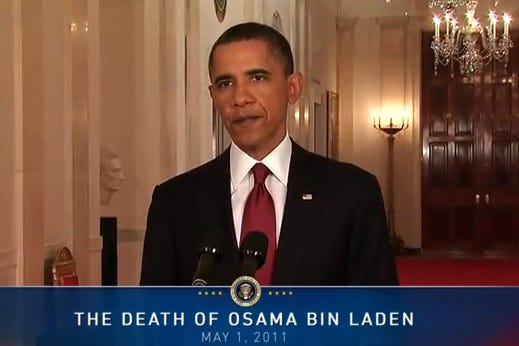
I couldn't find any previous president who did this. They all went on TV first. Obama announced bin Laden's killing on television. Bush announced the Iraq invasion on television. That's how it worked—until Trump decided it didn't have to.
The implications go beyond just media strategy. Foreign governments now have to monitor a former reality TV host's social media feed to learn about American military actions in real-time. That's not hyperbole—it's the new reality of international relations.
And since the White House considers Trump's social media posts official presidential statements, we're in uncharted territory about what counts as formal diplomatic communication. A Truth Social post apparently now carries the same weight as an Oval Office address.
While State Department officials have acknowledged this shift, noting that "when he tweets, when he speaks, the world watches" and that Trump's social media posts provide "the most clear framework that we can learn of his approach," at a time when trust in the media continues its decline, this approach doesn't do anything to reverse that trend.
Trump announced he would address the nation on television at 10pm, but unlike President Obama's single televised announcement about Osama bin Laden's killing at 11:35pm in 2011, Trump chose to break the news on social media first, then follow with traditional media. This layering of new communication methods over traditional ones, rather than replacing them entirely, may represent the new normal for presidential crisis communication, fundamentally changing how Americans—and the world—receive news of major military actions.
We're watching presidential communication evolve in real-time. Whether you think this is good or bad, it's happening. Share your thoughts below—and hit subscribe if you want more analysis on how media and politics are changing.