
The Ghost Market Fallacy
Why CBS News and The Washington Post are torching their actual subscribers to chase a demographic that will never show up.

The other night, I was texting my brother about nothing in particular when he dropped this gem:
“Did you see the latest over at CBS News?”
He was, of course, referring to the whirlwind transformation we have watched over the last week chez Bari Weiss—the “we are toast” memo, the cleansing of established talent, and the stampede of hires from her own Free Press ecosystem.
I responded by telling him that I thought the whole thing was “sad.” Not sad because of politics, but sad because of strategy. I said that Weiss seemed to think the problem with institutional trust was people when it is actually process. I told him hiring a roster of “anti-woke” voices would change the tenor of the content, but it will not restore trust.
He responded with this Business School-Caliber takedown:
“Sounds to me like this would fail class 101 at B school. Switching market segments - okay. But there are not millions of Fox/ Newsmax viewers waiting for her to transform CBS News into what they want. What is she losing her existing market for?”
He wasn’t alone. If you spend any time reading the pundit class reaction to Weiss/CBS, you’ll notice almost everyone is focused on the Who. The left screams about her hires; the right cheers them.
Both failings can be summed up with what I call The Casting Director Fallacy.
We treat the erosion of media trust as if it’s a crappy movie that just needs a few A-list celebrities to turn a profit. But when you view this crisis through the lens of product strategy—particularly, the work we’ve done on the architecture of trust—you realize that Weiss is attempting to fix an institutional problem with a casting solution.
Here’s why swapping actors won’t solve the systemic issues with legacy media.
1. The “Black Box” Problem
The reason my brother will never accept my explanation is simple: We are conditioned to think about media bias as a human problem.
If the news seems skewed, we assume it’s because the person communicating it is “one of them.” And if that’s the case, it naturally follows that the solution is to hire… “one of us.”
Bari Weiss has fallen into this trap. By scouring her contacts and aggressively hiring “anti-Covidiot” voices from her Free Press echo chamber, she is attempting to balance the scales. The problem is she’s trying to balance the roster while leaving the “Black Box” of CBS News firmly sealed.
Newsrooms didn’t use to matter. In a high-trust world, audiences gave the brand a “presumption of validity.” They trusted what they read or heard without needing to understand how it was manufactured.
But we don’t live in that era anymore. The presumption of trust is dead. When newsrooms operate in black boxes, every editorial decision is met with skepticism. Swapping one anchor for another doesn’t fix systemic problems, it just raises more questions. To the skeptical consumer, an anchor like Stephen Colbert is not the solution, he’s part of the problem.

2. “Scoops of Ideas” vs. “Scoops of Facts”
If you read Weiss’s internal memo carefully, she actually outlines her plan to weaponize opinion throughout the newsroom. Instead of the traditional “scoop of news,” she wants “scoops of ideas.”
Ideas. Let that sink in for a second: One of America’s most iconic legacy broadcasters is doubling down on publishing more “ideas.”
This is where my brother’s critique punches through. If you’re selling ideas, you need to build a platform for ideation. And right now, the media industry is flush with platforms selling ideas. Blogs. Vlogs. YouTube. Twitter. Twitch. Views are a non-zero sum game when it comes to “Ideas.” There is room for everyone.
But facts are different. Facts are a fixed asset. When one newsroom verifies a fact, they are inherently denying other newsrooms the opportunity to publish that same fact.
By pivoting CBS News toward “ideas” and “commentary,” Weiss is selling branding (followers, likes) in an attempt to win a trust race.
Brand asks: “Did this move you, incite you, make you feel strongly about something?”
Trust asks: “Did this help me? Was this useful? Was it true?”
Stoking political outrage will drive crazy engagement on social media. But it doesn’t earn trust.
3. Institutional Gravity (aka “Rent vs. Own”)
Ms. Weiss thinks she can “rent” the brand she built up at The Free Press—a nimble, personality-driven startup organization—and “rent” it out to CBS News.
Trust is not a portable asset. Brand identity bleeds into process. That’s why we call it culture.
We witnessed a painful example of this process-driven toxicity this week when Weiss “paused” a segment on 60 Minutes about deportation. Under normal circumstances, that’s called “editing.” But because CBS News has failed to purge the black box, they took a routine production decision and weaponized it as liberal bias. Even Weiss couldn’t outrun the cloud of mistrust hanging over her new squad.

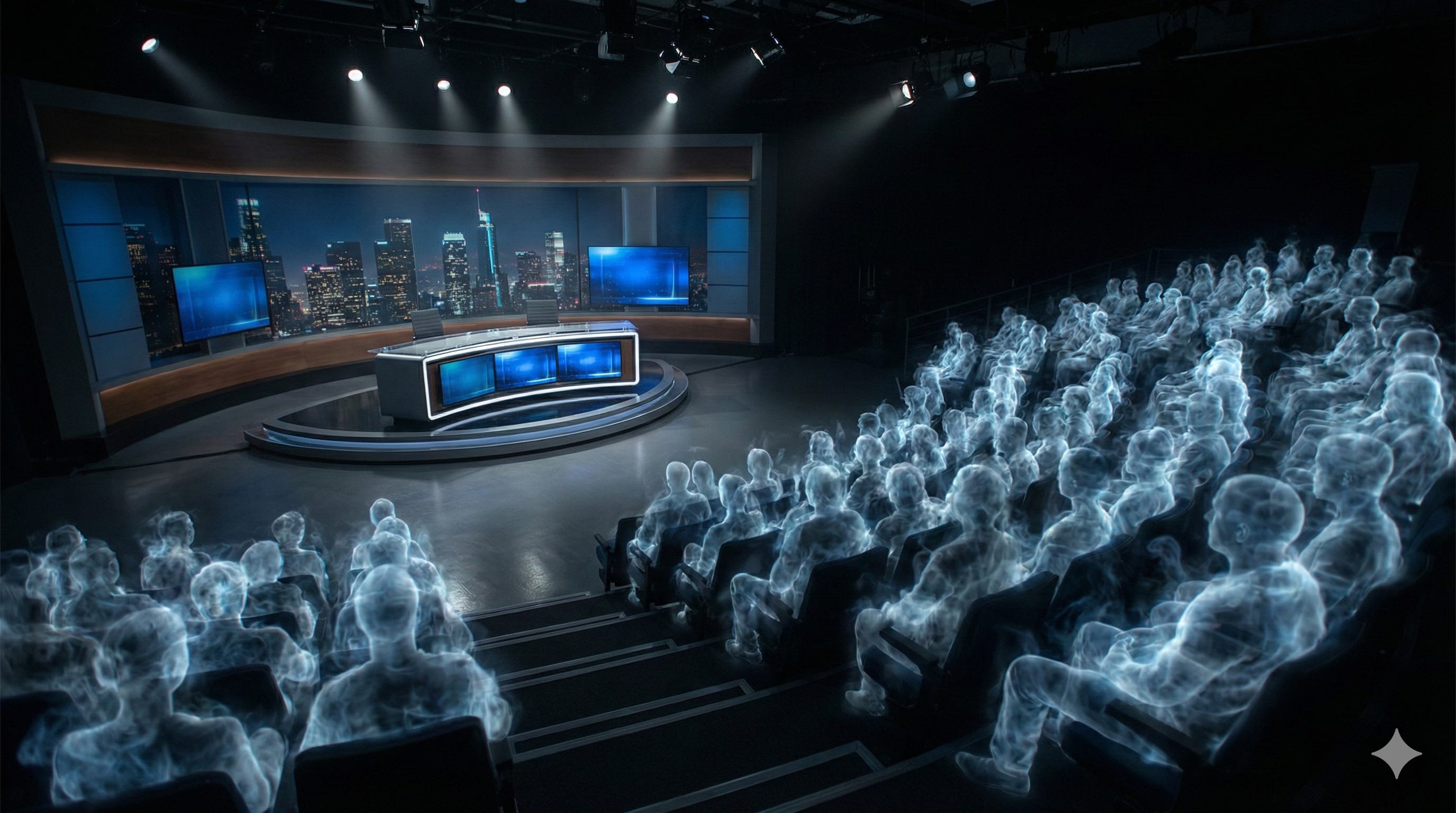
4. The “Ghost Market” Fallacy
This brings us back to my brother’s question: “She’s losing her current market for what?”
The generous read is Weiss is playing 4D chess. She sees the polling on young male Americans trending conservative… hard. We don’t know what to call them yet, but for lack of a better term, they are “Barstool Conservatives.” They are being completely ignored by the legacy media, and Weiss is trying to catch them.
Problem is, there is nothing catching.
My brother isn’t just theorizing. We actually have a body count we can point to. Follow me down memory lane to October 2024 and the great “Un-endorsement” of The Washington Post.
In his attempts to “drain the swamp” of lib bias, publisher Will Lewis killed the Post’s presidential endorsement. He did this with full knowledge that there would be no upside—new readers wouldn’t convert to donors just because the Post didn’t take sides.
He lit the trust phaser on full and watched thousands of subscriptions evaporate in a single day.
Will Lewis set the paper’s trust policy to self-destruct, and hundreds of thousands of readers abandoned ship. We can confidently say that happened because existing Post readers saw it as a liberal power move. But what if they would have done it for “no reason” at all? What if Will Lewis and Jeff Bezos had killed the endorsement without explaining it to their subscriber base? How long do you think the Post’s audience would believe them before jumping to the worst possible conclusion?
No one builds trust by abdicating accountability. When you throw subscribers under the bus—even with the best intentions and without a good reason—you eat away at the trust that binds your audience.
Weiss is poised to make the same mistake. The Gen Z audience she wants to reach does not watch linear television. The median age of a broadcast news viewer is over 60. The “Barstool Conservative” is on YouTube, TikTok, and Joe Rogan. They will not turn on a television set at 6:30 PM on a Tuesday to watch a sanitized 22-minute broadcast, regardless of whether the anchor is Tony Dokoupil or Norah O’Donnell.
So, my brother is right. Weiss is failing Business School 101. She is actively alienating the only customers who actually buy the product in exchange for a market that will never show up.

Conclusion: Don’t try and un-Burn the toast
Here’s the thing: Bari Weiss is correct. CBS News is toast.
In fact, every major news brand is toast if we don’t change how we operate. But trading lingo for woke-meter readers will not un-burn that toast. You can’t put new butter on burnt bread and expect it to taste good.
The problem isn’t the butter. The problem is the toaster.
Until someone is willing to take apart the media toaster—radically reimagine how we report, verify, and deliver facts to the public—we can swap anchors all we want. It won’t matter.
💬 Join the Conversation
Is my brother right? Is the “Ghost Market” strategy a Business School 101 failure, or do you think the pivot to “Anti-Woke” content is enough to save linear TV?
Leave a comment below—I’d love to hear your take.
P.S. — Did this analysis provide you with a breakthrough strategy?
If so, please consider making a one-time tip to support the deep research and analysis that goes into every Backstory & Strategy post.
Additionally, if you found this post helpful, please restack it and share it with your audience. This spreads the word and keeps me writing the types of content you enjoy.
I generally agree with your points, with the exception of the "black box" argument. Broadcast news has evolved to heavily incorporate news commentary. Unlike the impersonal and transparent reporting often found in digital news, the visible anchors and reporters on TV significantly shape public perception.
So while diversifying on-screen talent in terms of political alignment (or more broadly) might not solve the underlying "black box" of news production, it could influence the public's perception of political bias. This isn't to say young Republicans will suddenly tune into every CBS News broadcast (as I said, I agree with the overarching thesis here), but it does suggest that political diversification holds merit if the goal is to improve overall public perception and, to some extent, public trust.